
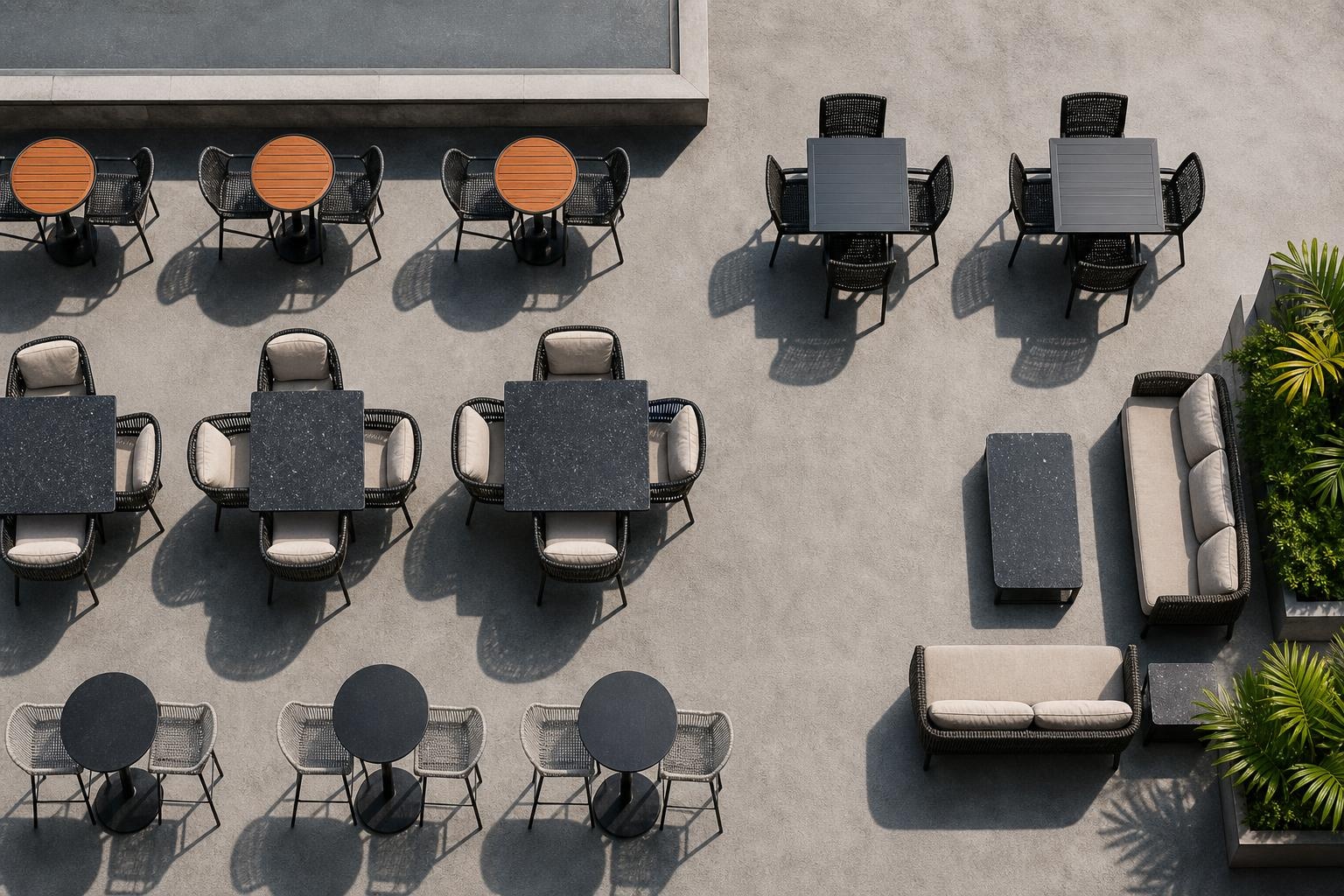
The best rooftop table is not always the one closest to the edge. A wide view can be memorable, but so can a seat where the conversation is easy, the chair suits the length of the visit and the weather does not keep interrupting the evening.
Rooftop bar seating shapes more of the experience than it first appears. Table height changes how comfortably you can eat. Distance from speakers changes how hard everyone has to listen. Exposure affects heat, wind and the chance that an outdoor section will need to close. The useful question is therefore not simply, “Can we have a view?” It is, “Which seat supports the evening we actually want?”
Start with the plan, then choose the table
A quick drink, a full dinner and a long conversation ask different things from a seat. Make that distinction before the host shows you the room.
| Your plan | Seating that often fits | Main trade-off to check |
|---|---|---|
| One drink and the view | Edge seat, standing rail or high-top | Exposure, comfort and whether the view requires facing away from your companion |
| Dinner | Standard-height table with upright chairs | Enough table space, stable lighting and shelter if the weather changes |
| A quiet conversation | Recessed table, side zone or indoor-connected seat | Distance from speakers, walkways and large groups |
| A relaxed late evening | Low lounge seating | Whether the posture still works for eating and whether everyone can hear comfortably |
| A mixed group | Conventional table or flexible cluster with varied chairs | Equal access, back support and a route that does not trap anyone behind furniture |
This is not a ranking. A high stool can be perfect for a short skyline stop and tiring for a long meal. A sheltered table may sacrifice a few degrees of panorama while making the whole visit calmer. The right seat is the one whose compromises match the occasion.
Read the five common seating zones
The edge: strongest outlook, highest exposure
Edge tables attract attention because they offer an immediate sense of height and openness. They can also be the warmest before sunset, the breeziest after dark and the first area affected when rain arrives. Some layouts position both guests toward the view; others leave one person looking into the room.
Choose the edge when the outlook is central to a short visit and the conditions are comfortable. For a longer booking, ask what happens if the venue closes that section. A good answer is more useful than a promise that the weather will cooperate. Rooftop Asia’s guide to planning around rooftop wind can help you decide when an exposed table is worth requesting and when shelter should take priority.
The central high-top: social and flexible
High-tops often sit near the energy of the room. They suit drinks, sharing a small number of plates and a visit where people may arrive or leave at different times. The raised position can also preserve a partial view when lower seats are behind a parapet or another row of tables.
The trade-off is physical. Backless stools, narrow footrests and small tabletops are not equally comfortable for every guest. They may also be inconvenient for bags, coats or a meal with several dishes. If the group plans to stay, look at the chair before committing to the table.
The lounge: slower mood, less formal posture
Low sofas and deep chairs create a relaxed rhythm. They encourage guests to settle in and can work well for cocktails or a small celebration. They are less convincing when the evening is food-led, when people need firm back support or when the table sits too low to use comfortably.
Check the relationship between seat and table, not just the furniture style. A generous sofa can still create an awkward meal if guests must lean forward for every plate. Groups should also notice whether the arrangement lets everyone face the conversation, rather than forming a long row where people at opposite ends disappear from one another.
The dining table: less theatrical, more capable
A standard-height table is usually the most versatile choice. It provides a stable surface for food, supports a more natural posture and makes it easier to hold one shared conversation. The view may be framed rather than uninterrupted, but the evening often gains coherence.
This format matters when food is the anchor. Ask whether the reservation is for the restaurant, bar or a particular zone, because a rooftop with several concepts may seat each booking differently. For a work-led meal, the same principle appears in our guide to a rooftop business dinner: the table should support the conversation instead of competing with it.
The sheltered or indoor-connected seat: the continuity choice
A covered table or a seat just inside sliding glass may not look like the most dramatic option on arrival. It can become the best one when heat, wind or rain changes. These seats also tend to make service and movement more predictable because they remain part of the operating plan in more conditions.
Do not treat shelter as a consolation prize. Consider whether guests can still step outside briefly, whether the city remains visible and whether the room feels connected to the rooftop. A well-chosen sheltered table can preserve the sense of place without making the entire evening depend on an exposed edge.
Three checks matter more than the photograph
Can everyone use the seat comfortably?
Look beyond capacity. A table for four is not necessarily comfortable for four people if the chairs are tightly packed, the route is narrow or one guest cannot use a high stool. Standard-height seating, space to remain in a wheelchair, supportive chair backs and a clear route should be discussed before arrival when they matter.
Accessibility is a complete journey rather than a label on one table. The Rooftop Asia accessibility guide covers the route from arrival and lift access through seating, restrooms and wet-weather alternatives.
Can people hear without leaning in all night?
Seat position changes the sound of a rooftop. A table beside a speaker, service station or hard wall may feel louder than another only a short distance away. Open edges can feel calmer at one hour and more exposed to music from a neighbouring zone later.
If conversation is the priority, request distance from speakers and main circulation rather than using the vague phrase “a quiet table”. The venue can act on a practical preference more easily than an absolute description. Our article on rooftop bar acoustics explains how seating, surfaces, music and crowd density combine across the evening.
What happens when conditions change?
The initial table matters less than the relocation plan. Ask whether outdoor seating is guaranteed, requested or assigned on arrival. If the terrace closes, find out whether guests move to an indoor table, wait for availability or lose that part of the booking entirely.
For groups, one useful question is whether everyone can move together. A backup scattered across separate tables changes the event. For a couple, a smaller indoor table may be perfectly acceptable if it keeps the pace intact. Decide what compromise you would accept before the weather forces a quick answer.
Make a useful request without designing the floor plan
A precise request should describe the need, not dictate an exact table number. Try combining three pieces of information:
- Purpose: “We are having dinner and would like to talk comfortably.”
- Priority: “A view is welcome, but shelter and standard-height seating matter more.”
- Constraint: “One guest cannot use a high stool,” or “Please keep us away from the main speakers if possible.”
This gives the reservations team room to work with the live layout. Avoid assuming that a photograph shows the current furniture, that an edge request is guaranteed or that “outdoor” always means fully uncovered. Layouts and operating zones can change, so the venue’s current confirmation should guide the booking.
When arriving, take a moment before settling. Check the seat height, table space, speaker position, route to the restroom and the nearest covered area. If the table clearly conflicts with the plan, ask early and politely whether another suitable option is available. Moving before the first order is easier than rebuilding the evening halfway through dinner.
The view should support the evening
Rooftop seating is a sequence of trade-offs: outlook against shelter, energy against conversation, relaxed posture against dining comfort. None of those choices has one correct answer. The mistake is allowing the most photogenic table to make every other decision.
Choose the occasion first. Then look for a seat that lets the group stay present, order comfortably and adapt if conditions change. The skyline will still be there when you stand for a photograph. The table is where the evening actually happens.