
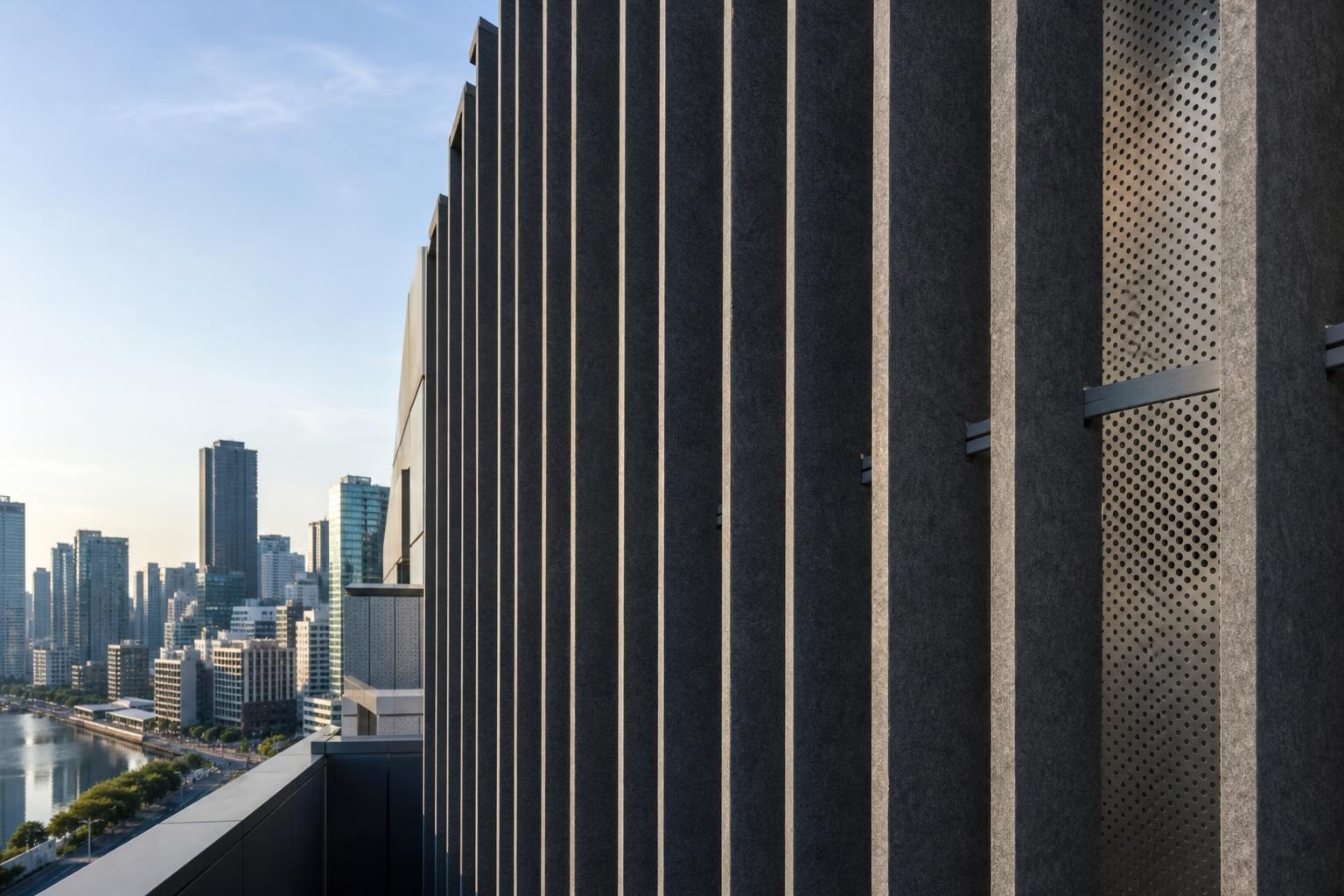
Rooftop bar acoustics rarely appear in the first photograph of a venue. You see the skyline, the edge table and the lighting. You do not hear the loudspeaker above the table, the clatter from a service station or the way a glass wall sends nearby voices back into the room.
Those details can decide whether an evening feels energetic, exhausting or easy to share. Height does not automatically make a space quiet. An open side may let some sound escape, while hard floors, façades, canopies and parapets can still reflect it. Add music, traffic, wind, equipment and a growing crowd, and two tables in the same venue may feel very different.
This guide is not a technical rating of individual rooftops. It is a practical way to notice how sound behaves, choose a better seat and ask more useful questions before a conversation-led visit.
A rooftop is a collection of sound zones
Think of the venue as several acoustic zones rather than one atmosphere. The table beside a speaker is not the same experience as a sheltered dining area. A corner bounded by glass may hold more reflected sound than a position near an open edge. A seat beside the service route may pick up ice, glassware and staff movement even when the music seems moderate.
The simplest distinction is between sound that is planned and sound that accumulates. Planned sound includes the music system or a live performance. Accumulated sound comes from conversations, chairs, tableware, air-conditioning equipment, traffic and weather. A venue may control the first carefully while underestimating the second once every table is occupied.
That is why a quiet arrival can be misleading. Ask how the space changes later. A table that works at 6 pm may sit inside a much louder mix after the DJ begins or the standing area fills.
Listen for four layers before choosing a table
A quick acoustic reading becomes easier when you separate what you hear:
- Programmed sound: speakers, DJs, live musicians and screens. Notice the direction of the nearest loudspeaker, not only its distance.
- People: nearby conversations, standing groups and the gradual rise in voices as the venue fills.
- Operations: glassware, coffee machines, ice wells, service doors, kitchen pass-throughs and movable furniture.
- The city: road traffic, rail, aircraft, construction, generators and wind moving around the building.
None of these layers is inherently a defect. Music may be the reason to visit, and city sound can add energy. The question is whether the combined mix suits the purpose of your evening. A birthday group, a first date and a business meal do not need the same acoustic conditions.
Hard surfaces change the experience
Sound reflects from hard surfaces such as floors, walls and ceilings. The US National Institute for Occupational Safety and Health explains in its guidance on engineering noise controls that nearby reflective surfaces can increase overall sound levels, while porous materials can absorb sound. A rooftop may be outdoors and still contain many reflective elements: stone paving, metal cladding, glass wind screens and a rigid canopy.
Look for evidence that the design balances those surfaces. Acoustic panels, perforated linings, textured finishes, planting and upholstered elements can all contribute, but no single material guarantees a comfortable result. Coverage, placement and the relationship between sound sources and seats matter. A decorative felt panel on one wall cannot compensate for a loudspeaker aimed directly at a conversation table.
Open air changes the equation but does not erase it. Some sound can disperse beyond the occupied area, while façades and sheltered corners may return other sound towards guests. Wind can also mask speech or create its own noise around screens, fabric and lightweight elements. Rooftop Asia’s guide to rooftop lighting design uses a similar principle: the quality of a space comes from layers and placement, not from one dramatic feature.
Choose the seat for the purpose
When conversation matters, the most photogenic edge seat is not always the strongest choice. Start with the sound source. A table slightly farther from a speaker and outside its direct line may feel calmer than a table that is technically more distant but faces the speaker. Avoid sitting between a loudspeaker and the audience it serves.
Then check what happens behind you. Service stations, lift lobbies and busy circulation routes create short, repeated interruptions. A protected corner can reduce movement, but a hard corner can also concentrate reflections. Test the exact seat instead of relying on the floor plan.
Group shape matters too. A long table increases the distance between speakers at opposite ends. A smaller round or compact table often supports one shared conversation more naturally. For an important meal, ask whether the venue can reserve a quieter zone rather than merely an outdoor table. The Rooftop Asia business dinner guide puts conversation before the view for exactly this reason.
Use a two-minute acoustic check
You do not need specialist equipment to decide whether a seat suits you. Before settling in, use a short listening test:
- Stand at the proposed table while the venue is operating, not in an empty room before service.
- Speak at a normal level with someone about an arm’s length away.
- Notice whether you are already leaning forward, repeating words or raising your voice.
- Pause and identify the strongest competing source: music, people, service or the city.
- Compare one genuinely different zone before accepting the first table.
NIOSH notes that needing to raise your voice to speak to someone at arm’s length can be a warning that noise may be hazardous in a workplace setting. Its limits are occupational, not a consumer rating system for a short evening, so do not turn that observation into a precise venue score. It remains a useful practical signal: if easy conversation is already difficult at arrival, the table is unlikely to improve when the rooftop becomes busier. Current NIOSH guidance on understanding noise exposure also stresses that sound level, duration and source all matter.
Design for different listeners, not an imaginary average guest
Background noise does not affect every guest in the same way. Hearing ability, language, fatigue, attention and the number of competing voices can all change how much effort conversation requires. A study indexed by the US National Library of Medicine on speech intelligibility in simulated restaurants found that understanding a target voice became harder as the number of interfering voices increased.
The considerate response is not to diagnose anyone at the table. Ask what setting works for the group. A guest may prefer a seat with their back to a wall, a clear view of faces, steady lighting or more distance from music. If a venue offers indoor and outdoor zones, compare them rather than assuming that one is universally quieter.
Good acoustic planning also supports respectful behaviour. Taking speakerphone calls, playing clips at the table or shouting across a shared viewpoint adds another layer to an already complex soundscape. The Rooftop Asia etiquette guide offers a wider framework for sharing seats, views and social space well.
Ask questions that reveal the real operating pattern
A useful booking message is specific. Instead of asking whether the rooftop is quiet, explain what you need and when you plan to visit:
- Is music amplified at that time, and does a DJ or live performance begin later?
- Which seating area is normally best for conversation?
- Can a specific zone be requested or guaranteed?
- Is there an indoor alternative with the same menu if wind or rain changes operations?
- Will a private event, match screening or entertainment programme affect the sound?
- Can the table accommodate a guest who benefits from a clearer view of faces or less background noise?
Reconfirm on the day when the conversation is important. Entertainment schedules, private bookings and weather responses can change the acoustic plan even if the furniture stays in the same place.
The best rooftop bar acoustics do not make a venue silent. They let the intended energy remain legible without forcing every guest to compete with it. Read the layers, test the exact seat and choose for the purpose of the evening. The skyline will still be there; the difference is that you may be able to enjoy it without losing the conversation.