
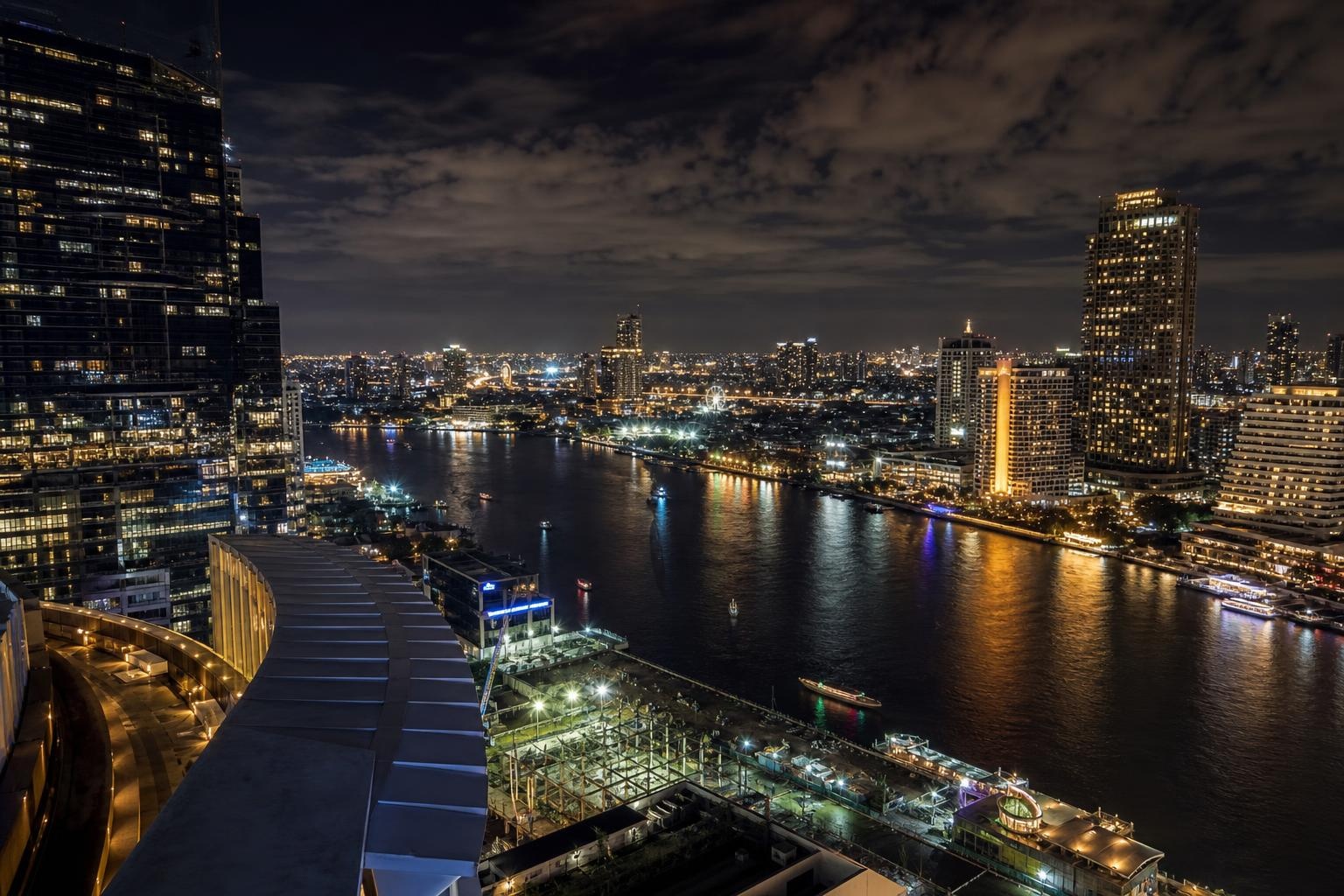
Asia’s most interesting rooftop projects in 2026 are not all trying to become louder versions of the same sunset cocktail bar. Recent openings and programmes point in several directions at once: a chef-led brasserie above Hong Kong, a coastal resort rooftop in Phuket, a Bangkok venue built around changing collaborations, and a 24-hour social terrace overlooking a Japanese strait.
Together, they reveal a useful shift. The view still matters, but it is increasingly the setting rather than the whole product. Food, programming, resort life and flexible communal space now give guests a more specific reason to go upstairs, and a clearer reason to return.
These are not rankings, and the four projects are not directly comparable. They are case studies in the rooftop trends Asia 2026 is making visible: a move away from one generic formula and towards rooftops with distinct jobs to do.
The rooftop is becoming a format, not just a viewpoint
For years, the most familiar rooftop formula was easy to recognise: high floor, open terrace, skyline, cocktails and a strong sunset hour. That format is not disappearing. What is changing is the amount of substance expected around it.
A new rooftop may now lead with a restaurant identity, fit into a broader resort itinerary, use a calendar of chef or music collaborations, or operate as an extension of a hotel’s shared living space. In each case, elevation adds atmosphere, but another idea gives the place its structure.
This matters to travellers because the word “rooftop” tells you less than it once did. One venue may justify a full meal; another may be best treated as a short sunset stop; a third may only make sense on the night of a particular programme. Reading the format is more useful than simply chasing the highest floor.
1. Restaurant-first rooftops
Terrace Boulud by Mandarin Oriental opened in Hong Kong in March 2026 as a rooftop French brasserie at Landmark Prince’s. The official announcement places it on the 25th floor, connected directly to Mandarin Oriental, Hong Kong, with a dining room and terrace looking towards Victoria Harbour and Central.
The important detail is not height alone. The project is organised around a recognisable restaurant proposition: Daniel Boulud’s four culinary “muses”, an à la carte menu, wine and cocktails, and a service pattern designed to move through lunch, dinner, aperitifs and later gatherings. The rooftop is part of the restaurant’s identity rather than a separate viewing deck with a food offer attached.
This restaurant-first model changes the booking question. Guests need to decide whether they want a meal, terrace drinks or a longer transition from dining into evening. The quality of the kitchen, pacing and indoor-outdoor relationship becomes as important as the panorama.
2. Resort rooftops woven into the stay
When Radisson Blu Resort Phuket Mai Khao Beach opened in April 2026, its rooftop concept arrived as one part of a much wider resort experience. The official opening announcement describes Luana On Sii as a superyacht-inspired rooftop bar and pool with views towards the Andaman Sea.
That context gives the rooftop a different role from a standalone city bar. It can connect a beach day, pool time, wellness activities and sunset without asking the guest to cross the city for a separate night out. Its value lies in continuity: the rooftop extends the resort’s coastal story upward.
The practical trade-off is that resort rooftops often serve several audiences at once. Hotel guests, families, couples and outside visitors may be using neighbouring facilities differently. Before visiting, it is worth confirming whether the pool and bar follow the same access rules, whether outside guests are accepted, and which parts of the rooftop are available at the intended time.
3. Programming that creates a reason to return
Sato San Rooftop Bar at Moxy Bangkok Ratchaprasong illustrates a programme-led model. Marriott’s official 2026 offer presented a three-month chef collaboration series from July through September, bringing visiting Bangkok chefs into the rooftop’s Thai-Isaan and Japanese-inspired format. The published series was due to close with a four-hands dinner on 25 September.
The dates will pass, but the idea has longer value. A rooftop with a changing calendar can give local guests a reason to return after the first skyline visit. It can also create sharper expectations: a collaboration dinner, DJ night or tasting menu is a specific experience, not a generic promise of “atmosphere”.
Programming also makes planning more date-sensitive. The normal venue identity may remain consistent while the food, music, crowd and booking terms change for one evening. Guests should read the live event page rather than relying on a general venue description, especially when a visiting chef or limited menu is the main attraction.
Sound becomes part of that decision. Rooftop Asia’s guide to rooftop bar acoustics explains why music level, crowd density, hard surfaces and seating position can alter the experience even when the view stays the same.
4. Rooftops as flexible communal space
MIZUBA at BEB5 Mojiko by Hoshino Resorts takes the broadest interpretation of the rooftop. BEB5 Mojiko opened in Kitakyushu in July 2026, and its top-floor terrace extends the hotel’s 24-hour TAMARIBA communal lounge towards the Kanmon Strait.
This is not primarily a conventional rooftop bar. The official launch describes a shared space that changes with the day: maritime traffic and open views, a sunset gathering with sparkling wine or non-alcoholic drinks, and a night-time connection to the lights across the water. The terrace supports the hotel’s social rhythm rather than requiring guests to enter a separate nightlife venue.
That flexibility is significant. It suggests that rooftop value can come from access, time and setting as much as from a specialised drinks list. A guest may use the space briefly in daylight, return for sunset, and see it differently again at night. The roof becomes part of everyday circulation.
What these four formats have in common
A clear primary purpose
Each project is easier to understand because it has a job beyond “offer a view”. Terrace Boulud is restaurant-led. Luana On Sii belongs to a coastal resort journey. Sato San uses collaborations to animate repeat visits. MIZUBA extends a communal lounge and frames the changing strait.
A clear purpose helps travellers choose. It also reduces the pressure on the skyline to carry the entire experience, which is useful on cloudy, humid or hazy days when the view may be less dramatic than promotional photography suggests.
More than one useful time of day
The new formats are not locked into the few minutes around sunset. Lunch can flow towards aperitifs; a resort afternoon can continue upstairs; a programmed dinner can lead a night; a communal terrace can work from daylight into evening.
That does not mean every hour is equally good. It means the venue has more than one credible use. Travellers should still match arrival time to the part they want, then verify live service and access.
Operational details that shape the experience
As formats become more complex, small details matter more. Indoor backup, pool access, event admission, restaurant reservations and weather policies can separate one part of a rooftop from another. Lighting and sound also define whether a space supports dining, conversation or a livelier programme. The Rooftop Asia explainers on rooftop lighting design and planning around rooftop wind offer useful ways to assess those layers.
What to check before visiting a newly opened rooftop
- Identify the real format. Decide whether the place is primarily a restaurant, resort facility, event venue or open social terrace.
- Use the official live page. Opening announcements establish the concept, but current reservations, access and programming can change after launch.
- Ask which area the booking covers. A table reservation may not include pool access, a preferred outdoor zone or entry to a special event.
- Check the date-specific programme. Visiting chefs, live music and limited menus can substantially change the pace and price of an evening.
- Keep an indoor alternative. Even a well-designed rooftop remains exposed to weather and operational changes.
- Choose the reason before the time. Book the meal, programme, pool period or open-view moment you actually want, then build the timing around it.
The strongest trend is specificity
The most useful lesson from these 2026 projects is not that every rooftop needs a celebrity chef, a pool or an events calendar. It is that a rooftop becomes more memorable when it knows what kind of place it is.
Asia’s next generation of rooftops may still offer the familiar pleasures of height, air and changing light. The better ones are adding a more precise promise: come for a serious meal, continue a resort day, return for a new programme, or simply share an elevated public space at your own pace. The view opens the door; the format gives the visit its shape.