
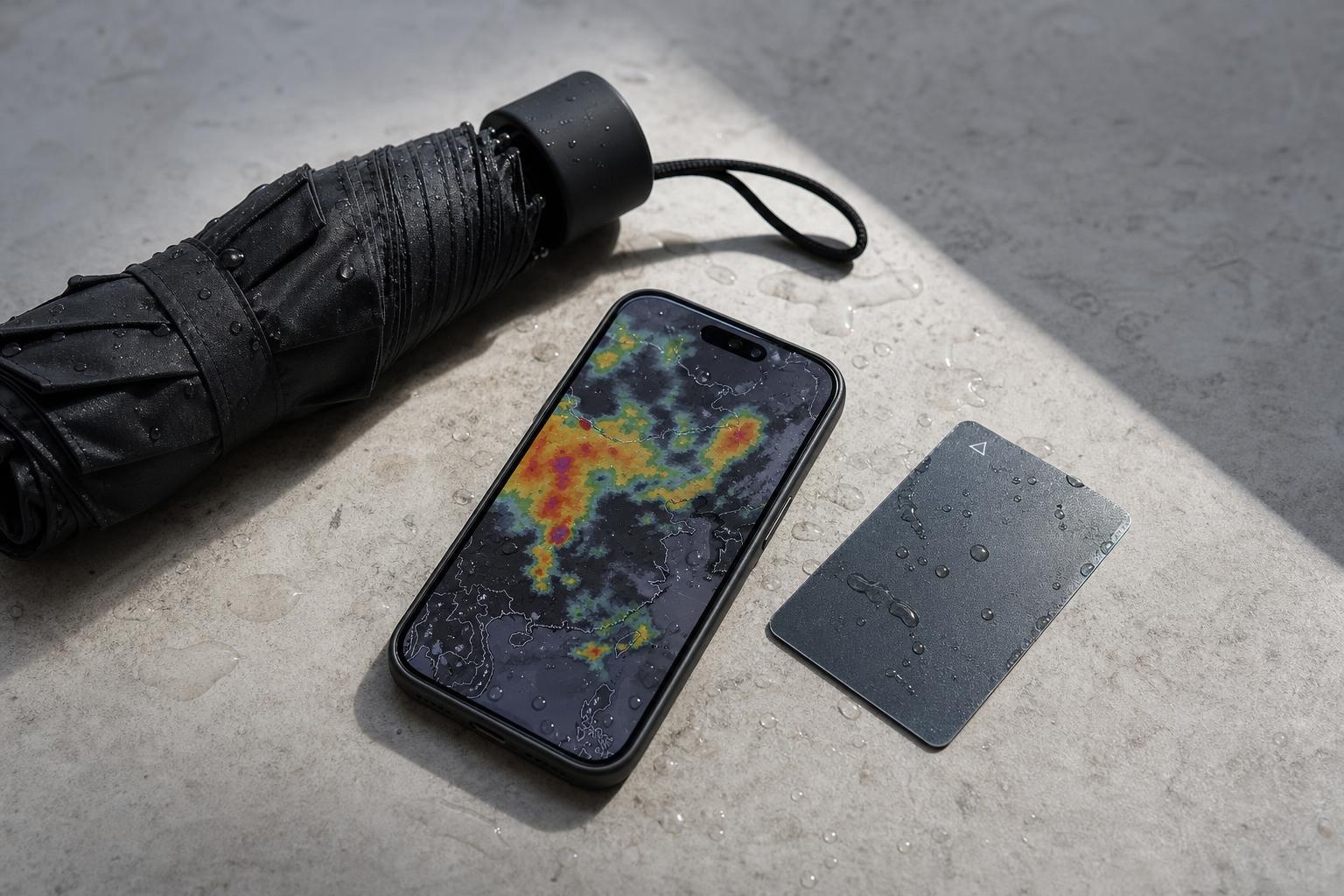
A rooftop thunderstorm can turn an easy evening into a fast safety decision. The important signal is not how hard it is raining or whether the skyline still looks clear. It is whether thunder or lightning is present, whether an official warning is active, and whether you can move promptly into a genuinely enclosed space.
This guide is built for travellers planning open-air rooftops across Asia. It does not replace the instructions of local authorities or venue staff. Its purpose is simpler: check before you go, know the indoor route, leave the open area early and do not return just because the rain has eased.
The decision is about shelter, not rain
Lightning can affect a place before heavy rain arrives or after a storm appears to have moved away. Singapore’s Meteorological Service Singapore lightning service notes that most strikes occur within 5 to 6 kilometres of a thunderstorm cloud, while lightning from a more distant storm can still affect a location more than 10 kilometres away.
That makes a rooftop a poor place to wait for visual certainty. A high, open or partly covered space remains outdoors. If thunder is audible, the safer decision is to leave the terrace and follow staff into an enclosed interior rather than trying to judge the storm from the view.
The Hong Kong Observatory’s thunderstorm guidance tells people outdoors to seek safe shelter immediately or as soon as possible, leave the water and avoid high ground, trees, masts and other conductive objects. Those instructions translate directly to rooftop life: step away from exposed edges, pools, freestanding structures and outdoor furniture, then go inside.
Before leaving the hotel, make three checks
1. Read the local warning, not only a generic weather icon
A daily thunderstorm symbol is useful context, but it does not show the exact movement or timing of a developing cell. Check the official meteorological service for the city, including any live thunderstorm warning, radar or lightning map. In Hong Kong, for example, the Observatory provides short-term warnings and a location-based lightning nowcast for the next hour.
Use that local information alongside the broader forecast. Rooftop Asia’s guide to reading rooftop visibility can help with haze, cloud and view quality, but a clear-looking gap in the clouds is not permission to ignore a lightning warning.
2. Confirm the indoor fallback
Ask the venue what happens when lightning is detected or a thunderstorm warning is issued. A useful answer identifies the enclosed room, the route from the terrace and who decides when the outdoor area closes and reopens.
“Covered” is not specific enough. A canopy may keep rain off a table without providing appropriate lightning protection. A venue can also have an indoor room that is reached by crossing another exposed section. Clarify the whole route, especially if anyone in the group has limited mobility.
3. Understand the booking consequence
Weather can change the table, delay service or end an outdoor booking. Ask whether the reservation moves indoors, whether food and drinks continue in the fallback space, and what happens to deposits or minimum spends if the terrace closes. Get the answer in writing when the evening depends on a particular outdoor experience.
If you hear thunder, stop treating it as a view
Thunder means lightning is close enough to require action. Do not wait for a dramatic bolt, a staff announcement or the first heavy downpour. Move calmly and promptly.
- Follow the venue’s evacuation or closure instructions.
- Leave pools and other open water immediately.
- Move away from parapets, exposed edges, masts and freestanding umbrellas.
- Do not stop in the doorway to photograph the storm.
- Enter the designated enclosed interior and remain there.
- Keep the group together without blocking the route for other guests.
The Hong Kong Observatory describes severe convective weather as capable of developing very quickly, with lightning and damaging gusts arriving over a short period. Its 2025 guidance highlights the particular threat to outdoor activity at height and advises going indoors when a thunderstorm warning is issued.
Know what does and does not count as shelter
A decorative roof, pergola, fabric awning or large patio umbrella may offer shade or rain cover, but it should not be treated as lightning shelter. The US National Weather Service lightning guide says sheds, picnic shelters, tents and covered porches do not provide protection. Its preferred options are a fully enclosed substantial building or, when necessary, a hard-topped metal vehicle with the windows closed.
For a rooftop guest, the practical destination is usually the building interior: a fully enclosed restaurant, lobby, corridor or another area chosen by the venue’s safety plan. An open-sided bar beneath a roof is still open-sided. A glass wall only helps if you are actually inside the enclosed space, not standing beside it on the terrace.
Good rain design is still valuable for everyday comfort and drainage. Rooftop Asia’s article on rain-ready rooftop design explains what guests can notice. During lightning, however, weatherproofing and safe shelter are separate questions.
Expect wind to complicate the move
Thunderstorms can bring abrupt squalls as downdrafts spread outward. Loose menus, cushions, glasses and decorative items can move before the rain becomes intense. This is one reason to respond to the warning early rather than waiting until the terrace becomes chaotic.
Let staff secure the outdoor area. Guests should focus on moving inside, keeping children close and avoiding objects that are already shifting. If the wider forecast also shows strong wind or gusts, use Rooftop Asia’s rooftop wind planning guide before leaving for the venue.
Do not return when the rain merely becomes lighter
The end of heavy rain is not the same as the end of the lightning risk. The National Weather Service advises remaining in a safe building or vehicle for at least 30 minutes after the last thunder. Treat that as a minimum personal rule while also following the local authority and the venue’s own reopening decision.
Reset the clock if thunder is heard again. Do not pressure staff to reopen an outdoor table because the sky looks brighter or because another part of the city appears dry. Local thunderstorms can be fast-moving and uneven, and lightning information itself may include missed detections or location errors.
When the venue does reopen, check whether the experience still makes sense. Wet flooring, changed seating, delayed service and another cell on the radar may make an indoor finish or a different evening the better choice.
Send one useful question before you book
We are considering an outdoor rooftop table on [date]. If lightning is detected or a thunderstorm warning is issued, where are guests moved, is the route fully indoors, and how are the reservation, deposit and service handled if the terrace remains closed?
This question asks about the safety process and the practical consequence at the same time. A clear answer is more valuable than a promise that the weather will probably improve.
A 60-second rooftop thunderstorm check
- Official source: check the city’s meteorological service, not only a general app.
- Live conditions: look for warnings, radar and lightning data shortly before departure.
- Shelter: know the enclosed indoor destination and the route to it.
- Booking: confirm what happens to the table, service, deposit and minimum spend.
- Trigger: if you hear thunder, go indoors promptly.
- Return: wait at least 30 minutes after the last thunder and follow local and venue instructions.
A rooftop evening does not fail because everyone goes inside early. The successful plan is the one that treats the terrace as optional, the indoor route as essential and a changing forecast as a reason to adapt rather than negotiate with the storm.