
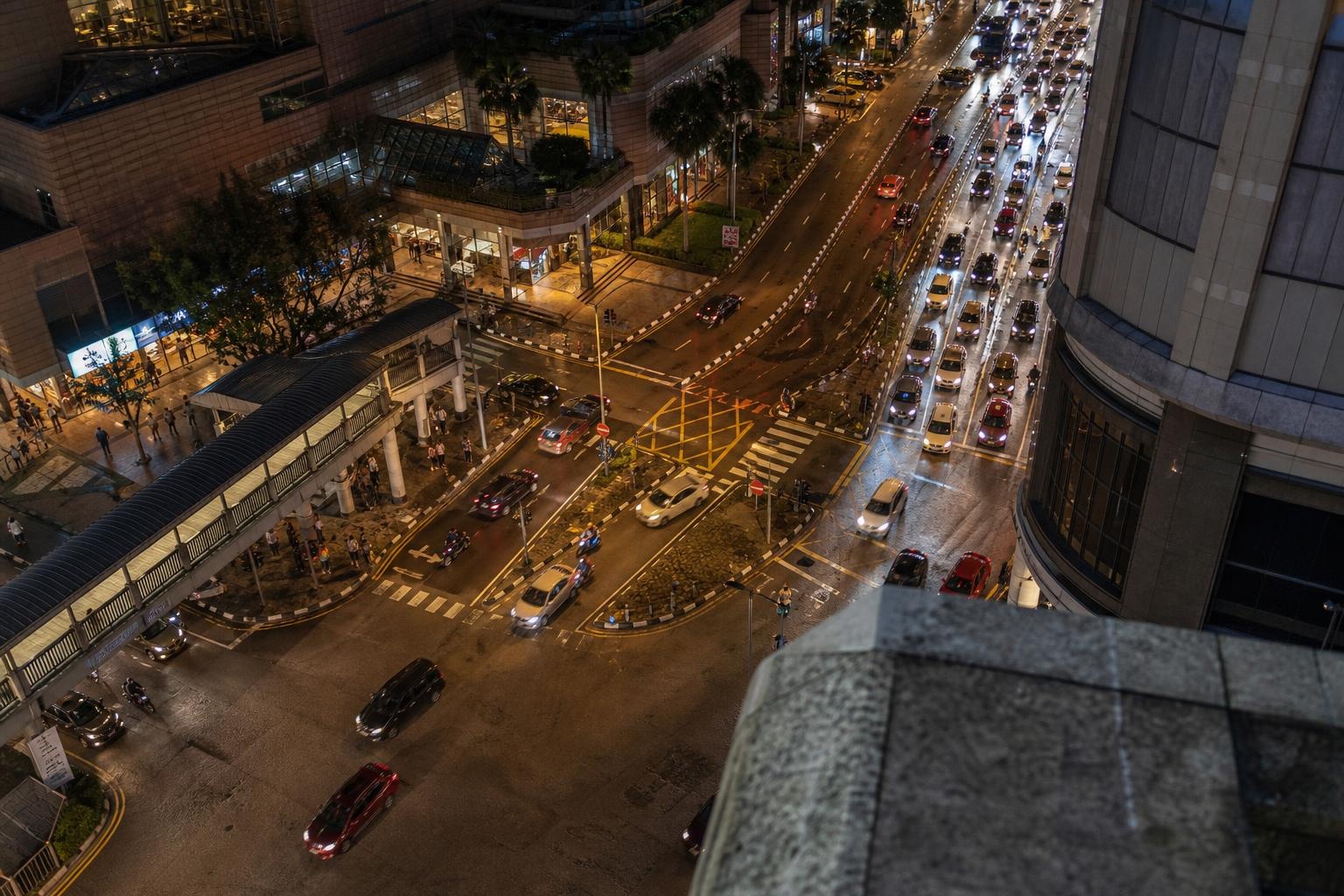
A rooftop can have a famous direction, a high floor and a carefully timed reservation, yet still deliver a muted view. The missing variable is often rooftop visibility: how clearly distant buildings, ridgelines, water and lights can be seen through the air at the time of the visit.
Cloud cover is only part of that picture. Fog and mist are made from suspended water droplets, while haze is associated with fine dust or smoke particles. Each can soften distance in a different way. The useful question is therefore not simply, “Will it rain?” It is, “What kind of view is the atmosphere likely to allow?”
This guide offers a quick way to answer that question before choosing a skyline-led evening in Asia.
Start with visibility, not the weather icon
A forecast icon compresses several conditions into one symbol. It may tell you that the evening should be cloudy or dry, but it does not necessarily tell you how far you will be able to see.
Where available, look for an actual visibility reading in kilometres. The Hong Kong Observatory’s live visibility service, for example, publishes readings from several locations and explains that low visibility can be caused by fog, mist or haze. Similar information may appear in a city’s official meteorological service, airport weather report or marine forecast.
Use that number as a planning clue rather than a promise. A reading from an airport, harbour or weather station may not reproduce conditions at a specific building. Local showers, terrain and the direction of the view can all make one part of a skyline clearer than another. What matters is the combination of the latest reading, the short-term forecast and what you can see on recent weather cameras.
Know what is reducing the view
The words fog, mist and haze are sometimes used loosely in travel conversation, but the distinction helps with rooftop planning. The Hong Kong Observatory’s explanation of fog defines fog as suspended water droplets reducing visibility below one kilometre. It notes that Hong Kong uses “mist” for visibility between one and five kilometres, while haze can form when dust particles remain suspended in stable, dry air.
| Signal | What it can do to a rooftop view | Useful response |
|---|---|---|
| Low cloud | Hides taller towers or the upper part of the skyline | Choose a lower, closer or neighbourhood-focused outlook |
| Fog or mist | Softens contrast and removes distant landmarks | Prioritise atmosphere, nearby lights and an indoor alternative |
| Haze | Reduces long-range clarity even when the sky looks bright | Check official visibility and air-quality information before committing |
| Passing showers | Can briefly erase a view, then sharpen it after the rain moves through | Keep the schedule flexible and watch the radar |
Humidity alone should not be treated as a visibility score. High humidity can support mist or fog when other conditions align, but the visible result depends on temperature, airflow and atmospheric stability. A direct visibility observation is more useful than guessing from humidity by itself.
Use a three-check decision before booking
1. Check the city, then the viewing direction
Begin with the official local forecast, visibility reading and air-quality information. Then think about which direction matters. A venue may face a harbour, mountain line or cluster of towers that sits farther away than the rest of the city. Moderate visibility can still support a satisfying close urban scene while making a distant landmark disappear.
This is why recent, time-stamped city cameras are more useful than a polished promotional photograph. They show what the same atmosphere is doing to real distances now. Avoid treating a single social-media image as evidence unless its date and location are clear.
2. Check the timing window, not just sunset
Sunset time is helpful, but it is not the whole schedule. In humid conditions, the skyline may fade before the sun reaches the horizon. During a passing shower, the clearest interval may arrive later, when rain has moved away and city lights begin to separate from the darker background.
If the view is the central reason for going, keep a wider arrival window. Rooftop Asia’s guide to Bangkok rooftop bars for sunset shows how different city and river perspectives can support different versions of the early evening. The same principle applies beyond Bangkok: a broader nearby view can remain rewarding when the far horizon is indistinct.
3. Check whether the evening still works without distance
A strong plan should survive a softer skyline. Ask what remains if the longest view disappears: food, conversation, architecture, music, a shorter neighbourhood outlook or an indoor window seat. This is not pessimism. It is a way to avoid paying for a view-only plan when the atmosphere has other ideas.
Table position matters too. Glass can introduce reflections at night, while exposed edge seats may feel less comfortable when wind changes. The practical guide to rooftop wind in Asia can help separate the visibility decision from the comfort decision.
Read clear, soft and poor conditions differently
Clear conditions reward distance. This is when a skyline-led reservation, edge-facing table or photography plan makes the most sense. Even then, confirm the weather cover and table policy because a clear forecast does not guarantee an outdoor seat.
Soft conditions can still be visually interesting. Thin mist, broken cloud and scattered rain may create layers, reflections and changing light. Choose a venue or area where nearby buildings, water or street patterns provide a second subject. A softer evening can feel more atmospheric than a completely clear one, provided you are not promising yourself a precise long-range landmark.
Poor conditions call for a different plan. If fog, dense haze, thunderstorms or a public air-quality advisory are present, the best decision may be to choose an indoor experience, shorten the outdoor portion or move the visit. The World Health Organization notes that changing the timing and location of outdoor activity can alter pollution exposure because levels vary across space and time. Follow local health guidance, especially if anyone in the group is more vulnerable to air pollution.
Photography needs a separate reality check
Human vision and a phone camera do not interpret a soft skyline in the same way. Haze lowers contrast, glass adds reflections and automatic night modes can brighten the sky until distant detail looks flatter. A clear-looking preview on a small screen may not hold up when enlarged.
Clean the lens, avoid shooting through strongly lit glass when possible and expose for the city lights rather than trying to force detail out of a blank horizon. When visibility is limited, use nearby geometry, reflections and layers instead of zooming into an indistinct landmark. Rooftop Asia’s guide to rooftop photography in Asian cities offers a fuller light-led plan.
Most importantly, do not let photography turn a weather check into a safety problem. Follow venue instructions, stay behind barriers and keep equipment clear of walkways.
A two-minute rooftop visibility checklist
- Read the official short-term forecast for the correct district.
- Look for a current visibility reading in kilometres.
- Check official air-quality advice, not only how the sky appears.
- Use recent weather cameras to compare near and distant landmarks.
- Check radar if showers or thunderstorms are possible.
- Decide whether the evening still works if the far skyline disappears.
- Confirm outdoor seating, weather cover and cancellation terms with the venue.
Rooftop visibility is not about finding a perfect forecast. It is about matching the evening to the atmosphere that is actually there. Clear air supports distance; mist and broken weather can support mood; poor conditions favour a closer, more flexible plan. Read those signals before booking, and the view becomes one part of a good evening rather than a fragile promise.