
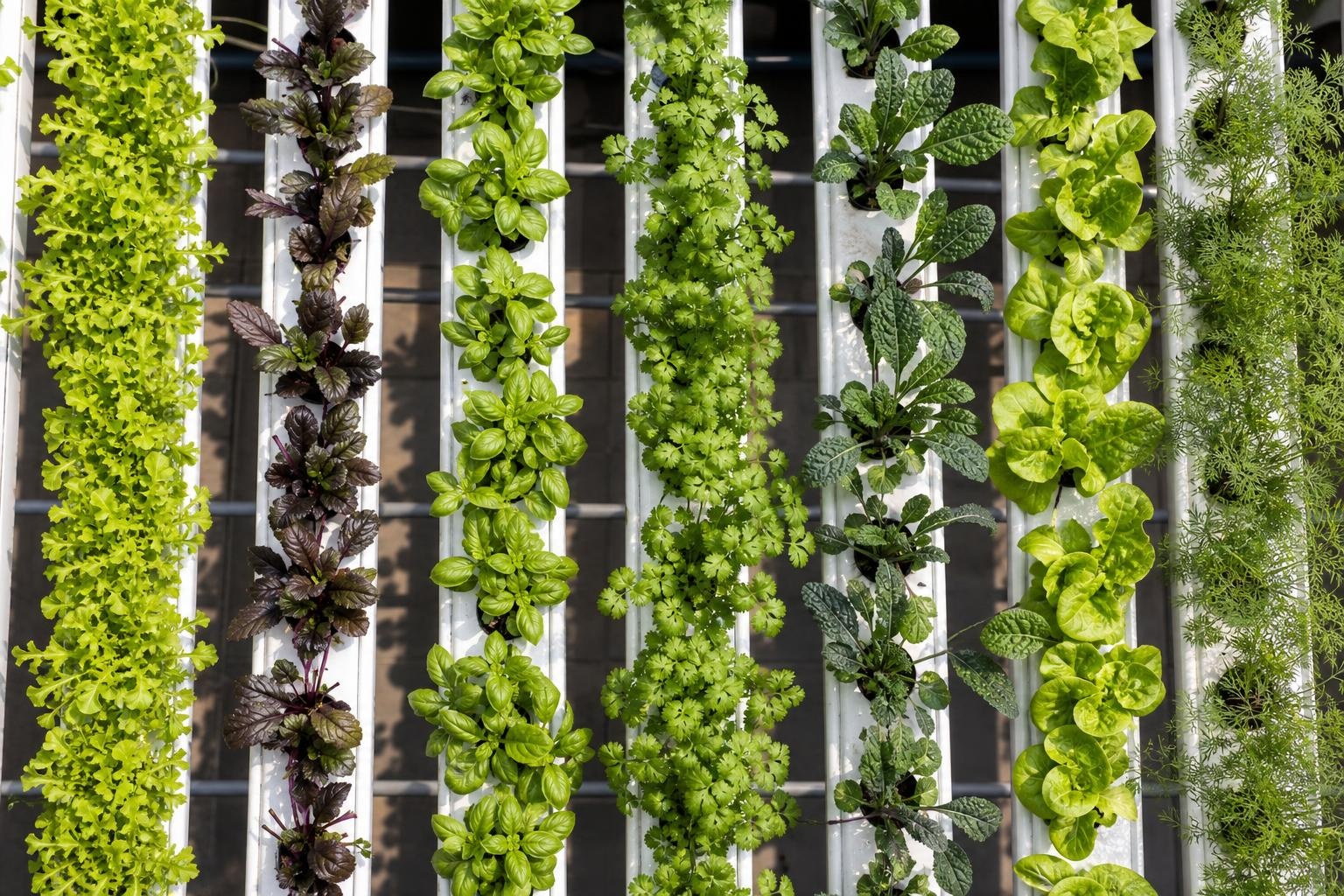
Singapore hotel rooftop farms turn a part of the building that guests rarely think about into a working source of herbs, edible flowers and fresh produce. The most interesting examples are not simply decorative green roofs. They connect growing space with restaurant kitchens, bars, spa treatments, education or bookable activities.
That does not mean a hotel roof can supply an entire property, or that a few planters make every meal local. The more useful question is what each farm actually does. Current first-party information from four Singapore hotels shows several distinct models: a top-floor garden feeding several departments, a network of herb gardens supplying kitchens, an aquaponics farm used for education, and an urban farm that has become part of the guest programme.
First, separate a green roof from a rooftop farm
Rooftop planting covers more than one idea. Singapore’s National Parks Board distinguishes an extensive green roof, which is generally light and not designed for active use, from an intensive roof garden that can support a wider range of plants and be accessible for recreation or social use. A productive farm adds another purpose: growing food.
The Singapore Food Agency notes that rooftop agriculture can use systems ranging from soil beds to hydroponics. In other words, there is no single visual template. One hotel may have carefully labelled herb beds; another may use water-based growing systems; another may integrate edible planting into a broader garden.
This distinction matters because attractive landscaping and food production make different claims. A roof can improve the character of a building without supplying a kitchen. A productive farm can contribute ingredients without replacing the hotel’s normal suppliers. The strongest hotel projects explain that relationship instead of asking visitors to infer it from greenery alone.
Four hotels, four ways to use the roof
PARKROYAL COLLECTION Pickering: one farm, several destinations
The official page for the PARKROYAL COLLECTION Pickering Urban Farm places it on Level 16, beside the COLLECTION Club Lounge. The hotel says the farm contains more than 50 varieties of vegetables, fruits, herbs and edible flowers. Its output is used across Lime Restaurant, Lime Bar, the club lounge and St. Gregory spa.
That breadth is more revealing than a single garnish. The farm is presented as a connection between food, drinks and wellness. It also shows why a hotel farm should be judged by its distribution route: where does the harvest go, and can a guest encounter it in more than one part of the stay?
Grand Hyatt Singapore: a practical herb supply
Grand Hyatt Singapore describes a different scale. Its current sustainability page says that three rooftop gardens provide 30% of the herbs used by the hotel’s restaurants and events services. The property also sources vegetables from ComCrop, a commercial rooftop farming company in Singapore.
This model is less about turning one farm into an attraction and more about creating a repeatable kitchen input. Herbs are well suited to that role: small quantities can influence aroma, flavour and presentation, while several growing areas reduce dependence on a single visible show garden.
Fairmont Singapore: production becomes education
The Fairmont Singapore aquaponics farm adds an educational dimension. The hotel describes it as the first urban aquaponics farm in Singapore’s hotel industry and says it welcomes students, hospitality professionals, government agencies, corporate partners and other visitors. Fairmont reported more than 570 rooftop visitors in 2025.
Aquaponics makes the system itself part of the story. Visitors are not only shown herbs in soil; they can learn how plants and water-based cultivation interact. The farm therefore works as a demonstration space as well as a source of fresh ingredients.
PARKROYAL COLLECTION Marina Bay: from operating system to guest activity
At PARKROYAL COLLECTION Marina Bay, the hotel says rainwater supports its Urban Farm and that produce is used in Peppermint, Portman’s Bar and St. Gregory spa. A separate current hotel experience page advertises guided harvesting and cooking sessions on selected days, subject to advance registration and operational conditions.
This is the clearest example of a farm becoming guest programming. The roof is not only backstage infrastructure; it can shape an activity, a conversation with hotel staff and the food served afterwards. Because schedules, prices and weather policies can change, travellers should treat any tour as a live offer and confirm it directly before planning around it.
What reaches the plate or glass?
The likely answer is not an entire meal. Hotel farms are especially useful for ingredients that are harvested in small quantities and benefit from freshness: herbs, edible flowers, salad leaves and aromatics. Those elements can appear as a garnish, a drink botanical, part of a salad or an ingredient used in a spa preparation.
Guests should still read menu language carefully. “Farm-to-table” may describe selected ingredients rather than every component of a dish. A menu may change with the season, crop health and kitchen needs. A rooftop harvest is therefore best understood as one traceable layer in a much larger supply system.
That nuance is important in a city where rooftop agriculture has both promise and limits. Singapore’s Ministry of Sustainability and the Environment reported in 2025 that rooftop farms on multi-storey car parks contributed less than 1% of local production in 2024. Those commercial farms are not the same as hotel gardens, but the figure is a useful reminder: rooftop growing can be meaningful without being large enough to solve food supply on its own.
The roof is also part of the building
Productive planting does not remove the practical demands of a roof. Water, drainage, wind, heat, access, maintenance and structural capacity all shape what can grow and how people can move through the space. The National Parks Board describes rooftop systems as combinations of vegetation, growing media, filter layers, drainage or storage cells, protection membranes and root barriers.
For guests, those invisible layers explain why two farms can feel completely different. One may be an operational zone with limited access. Another may be designed as an intensive garden that supports tours or social use. Rooftop Asia’s guide to rain-ready rooftop design in tropical Asia offers more context on drainage and weather transitions, while the article on rooftop shade design explains how planting and cover affect comfort without automatically creating a cooler microclimate everywhere.
How to visit without expecting a public attraction
A hotel can operate a rooftop farm without opening it for casual walk-ins. Before making a special trip, check what the property actually offers.
- Ask whether access is public. Some farms are working areas, while tours may be reserved for hotel guests, groups or specific programmes.
- Confirm the date and weather policy. Outdoor activities can move or be cancelled in rain, high heat or operational disruption.
- Look for current menu language. If tasting farm produce is the priority, ask which dishes or drinks currently use it.
- Do not assume every green space is productive. Landscaping, a roof garden and an agricultural system can overlap, but they are not interchangeable.
- Keep the scale in perspective. The value may be freshness, education or a visible operating practice rather than high-volume production.
Why this is a rooftop trend worth watching
Singapore’s hotel farms show rooftops moving beyond a single guest-facing role. The same upper level can support growing, water management, education and hospitality storytelling, even when the restaurant or bar itself is elsewhere in the building.
That makes the trend different from simply adding more greenery to a view. A working farm creates a chain that can be checked: what is grown, where it goes, who can visit and how the system fits the building. It also gives hotels a more concrete story than a generic sustainability label.
Rooftop Asia’s overview of rooftop trends shaping Asia in 2026 looks at how programming and destination dining are changing elevated venues. Singapore hotel rooftop farms add another direction: the roof as a productive, educational part of hospitality, not only the place where the evening ends.