
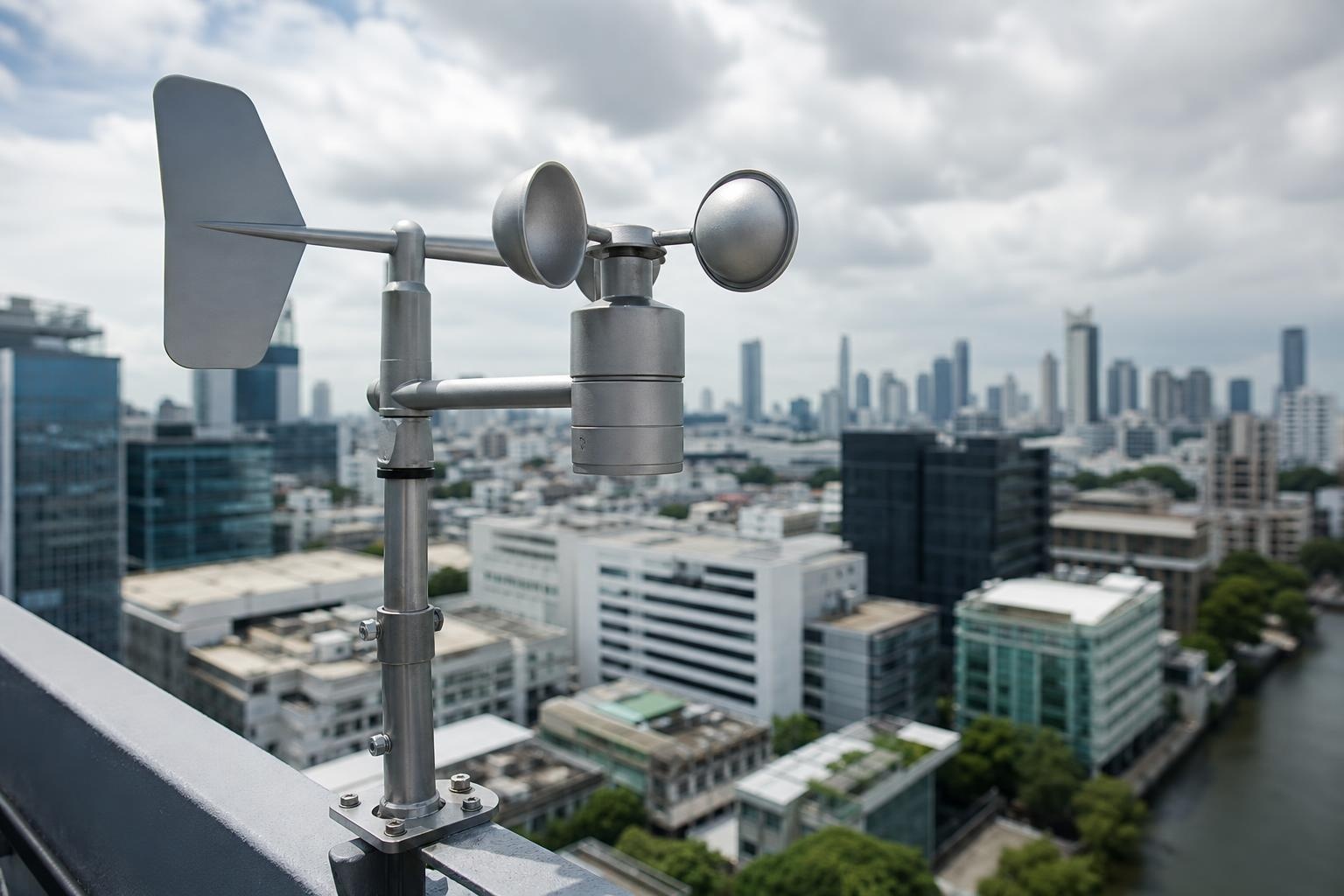
Rooftop wind can turn a promising evening into a short one. The street may feel calm, yet an exposed upper level can be breezier, cooler and much less predictable. That does not make a rooftop a poor choice. It means the best plan is based on exposure, gusts and fallback space rather than temperature alone.
This guide explains how to read rooftop wind before you go, what to notice when you arrive and when moving indoors is the better decision. It is designed for evenings across Asia, where dense towers, waterfronts, monsoon flows and fast-moving thunderstorms can produce very different conditions from one district, building or hour to the next.
Why wind feels different above the street
Air close to the ground is slowed and disrupted by buildings, trees and other obstacles. Higher, more exposed places often have less surface friction, so the air can move faster. The Hong Kong Observatory’s explanation of wind and height also adds an important qualification: wind does not increase neatly at every level, and thunderstorms can create unusually strong gusts near the ground.
Urban form complicates the picture further. Towers can shield one side of a building while accelerating or redirecting airflow around corners and gaps. A seat beside a solid wall may feel comfortable when a table a few metres away is exposed. This is why a city-wide forecast is a starting point, not a promise about one rooftop table.
The practical lesson is simple: do not judge an elevated space by the hotel entrance, pavement or taxi drop-off. Treat the rooftop itself as a separate micro-setting and assess it when you arrive.
Read the forecast in three layers
A single wind-speed number is not enough. Before leaving, look for three pieces of information: the average wind, the expected gusts and any active warnings.
1. Start with the average wind
The average, or sustained, wind describes the general flow over a defined period. It helps you picture the baseline: still, lightly moving, consistently breezy or more forceful. The Met Office guide to forecast displays notes that the reported wind speed is a mean value and that actual conditions rise and fall around it.
Use that number to think about duration. A light but continuous breeze may be pleasant for one drink yet tiring through a long dinner, particularly if the air is cool, humid or carrying fine rain.
2. Give gusts their own weight
Gusts are short-lived peaks, not the same thing as sustained wind. The Hong Kong Observatory’s guidance on gusts describes them as abrupt surges in speed or sharp changes in direction. They may accompany thunderstorms, squall lines or strong monsoons and can be substantially stronger than the average wind.
For a rooftop visit, gusts matter because they affect comfort in sudden ways: napkins lift, hair and loose clothing move, doors become awkward, conversation is interrupted and staff may need to secure objects or close exposed areas. If the forecast shows a large gap between the mean wind and the gusts, plan for the peak rather than the calmer number.
3. Check warnings, not just icons
A generic cloud or rain symbol can hide the more important message. Open the local meteorological service and read its current warnings, thunderstorm notices and wind commentary. Official alerts take priority over a reservation, sunset plan or non-refundable taxi ride.
Local variation matters too. Hong Kong’s Strong Monsoon Signal guidance, for example, warns that topography and nearby buildings can modify airflow and create exceptionally gusty conditions in small areas. The same planning principle applies elsewhere: use the authority serving the city you are actually visiting.
Choose the right amount of shelter
“Outdoor rooftop” is not one fixed format. The best choice depends on how much exposure you want and how flexible the venue is.
- Fully open space: best when conditions are settled and the open-air feeling is the main reason to go. It offers the least protection if wind changes.
- Partly screened terrace: glass, walls, planting or recessed seating can reduce direct exposure while preserving the view. Ask whether seating can be reassigned if one section becomes uncomfortable.
- Indoor-outdoor venue: useful when the forecast is uncertain or the evening is important. A connected indoor room lets the plan continue without turning the night into a weather test.
Shelter should be understood as flexibility, not as a guarantee. Even a screened table can receive crosswinds, and a retractable roof does not automatically solve gusts at the sides. If weather resilience is central to your choice, the related guide to rain-ready rooftop design explains what guests can notice in transitions, covered zones and fallback layouts.
Build a wind-aware evening
The easiest plan has three decision points rather than one rigid reservation.
- Two or three hours before: check the latest hourly forecast, expected gusts and active warnings. Screenshots from the morning are already stale for a fast-changing evening.
- Before travelling: confirm that the outdoor section is open and ask whether an indoor or better-sheltered table is available. Staff on site can see conditions that a city forecast cannot describe.
- On arrival: pause before settling in. Notice moving plants, loose menus, swinging doors, fabric movement and whether guests are being relocated. These are more useful than insisting on the table with the widest view.
Keep the rest of the itinerary simple. One rooftop with a nearby indoor alternative is stronger than a sequence that depends on several exposed spaces. For hot cities, this also pairs well with the timing principles in the guide to planning a rooftop evening in hot weather: conditions, shade and fallback space can matter more than height.
What wind changes once you are seated
Comfort is not only about avoiding an obvious storm. Moderate wind changes how an evening works.
Temperature: moving air can make an exposed seat feel cooler than the forecast temperature suggests. A light layer is useful even in warm destinations, especially after sunset or beside water. Choose something secure and close-fitting rather than a loose scarf or hat that needs constant attention.
Food and drink: lightweight menus, napkins, garnishes and tall glassware are more vulnerable to sudden movement. Let staff manage table items and follow any request to move or clear the setting. Do not place personal belongings on parapets, ledges or exposed edges.
Conversation: continuous airflow and wind noise can make a large table tiring. A more enclosed corner often works better for dinner, a date or a business discussion than the most dramatic edge seat.
Photography: brace the camera or phone with both hands and keep straps secure. Avoid blocking service routes while waiting for a calmer moment. The guide to rooftop photography in Asian cities offers a broader light-led approach that does not take over the evening.
Know when the plan should change
There is no universal wind-speed threshold for every guest or venue. Building design, furniture, exposure and local operating rules differ. The safest decision comes from warnings, staff instructions and what is happening on site.
Move indoors or leave when the venue begins closing sections, securing loose items or asking guests to relocate. Do the same if doors become difficult to manage, unsecured objects start moving, visibility falls sharply, thunder is nearby or official warnings escalate. Never argue for access to a closed terrace because the view still looks clear.
Staff may act before conditions feel severe. That is sensible: a gust arrives faster than a group can finish drinks, settle a bill and collect belongings. The official gust guidance specifically advises avoiding open areas when warnings or special weather tips highlight strong gusts.
A five-question rooftop wind check
- What is the latest average wind, and how strong are the expected gusts?
- Are thunderstorm, monsoon, tropical cyclone or strong-wind notices active?
- Does the venue have a genuinely usable indoor or sheltered alternative?
- Can the booking still work if the edge table or outdoor section closes?
- Am I prepared to follow staff instructions and change the plan quickly?
The best rooftop wind strategy is not to predict every gust. It is to choose a venue and an evening plan that remain enjoyable when conditions change. Check the current forecast, value shelter over a perfect edge seat and keep an indoor fallback close. The view is better when you are not spending the night holding everything down.