
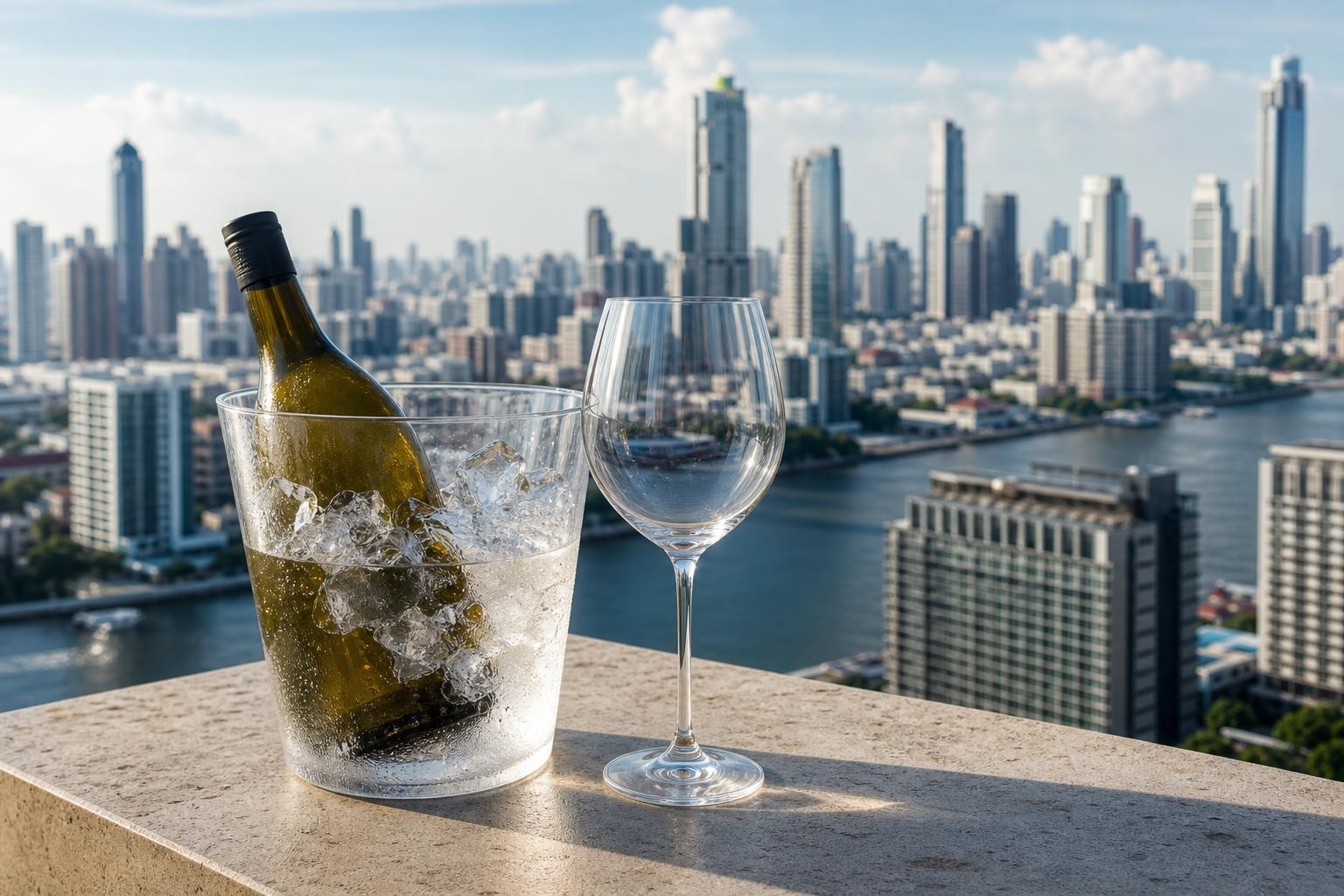
A rooftop can make a bottle feel more celebratory, but heat changes the service faster than the view changes. A white wine that arrives bright and cold can lose definition halfway through the first glass. A red served at the terrace’s ambient temperature may feel heavy before dinner begins. The useful question is therefore not simply, “Which wine do I like?” It is, “Which wine, pour size and service setup will still work at this table twenty minutes from now?”
This guide is for warm and humid rooftop evenings across Asia. It does not require specialist vocabulary or a hunt for a prestigious label. It uses a few practical decisions to keep the wine fresh, the meal coherent and the evening comfortable.
The rooftop problem is speed, not sophistication
Outdoor heat acts on the bottle, the glass and the guest at the same time. The bottle warms between pours. A broad glass exposes more wine to warm air. Direct sun heats the table and the vessel. Wind may make the air feel cooler while the wine continues to warm. A long conversation can turn one generous pour into a completely different drink by the time it is finished.
That does not mean every rooftop needs technical wine service. It means the best order is often the one with a simple temperature plan. Ask whether the bottle can stay in an ice-water bucket, whether smaller pours are possible and whether the table will be shaded. Those details usually matter more than choosing between two neighbouring vintages.
When the forecast is demanding, plan the whole outing before planning the bottle. Rooftop Asia’s guide to rooftop bars in hot weather explains why a protected or indoor start and a later move outdoors can work better than committing to the terrace too early.
Start with the style that will survive the table
A warm rooftop rewards wines that hold onto freshness. Sparkling wine, crisp dry whites and dry rosé are intuitive choices because they are normally served chilled and can return to the bucket between pours. Lighter reds can also work well when lightly chilled, especially with grilled vegetables, poultry, tuna or dishes that would overwhelm a delicate white but do not need a dense red.
Full-bodied whites and structured reds are not wrong choices. They simply need more deliberate handling. A full-bodied white may taste muted if it is served extremely cold, then become more expressive as it warms. A red may arrive balanced from a temperature-controlled cellar but become broad and less defined if the bottle sits in tropical air. For either style, ask the server to keep the bottle cool rather than treating “room temperature” as the temperature of the terrace.
| What you want | Useful starting style | Service move |
|---|---|---|
| A bright aperitif | Sparkling wine or crisp dry white | Keep the bottle in an ice-water bucket and pour modestly |
| A flexible food wine | Dry rosé or fuller white | Begin chilled, then let each small pour open in the glass |
| A red without heaviness | Lighter-bodied red | Ask for it lightly chilled and away from direct sun |
| A structured dinner wine | Full-bodied white or red | Protect the bottle from heat; avoid one large, slow glass |
Temperature is a range, not a race to maximum cold
The Wine & Spirit Education Trust explains that service temperature affects how clearly a wine shows its style. Its guidance places full-bodied whites at a lightly chilled 10-13°C and notes that serving white, rosé or sparkling wine below 6°C can mask flavour. It also warns that red wine above 18°C can lose freshness and seem muddled.
You do not need to measure the glass on a night out. Use those figures to understand the direction of travel. If a white is almost painfully cold, let the first small pour sit for a moment. If a red feels warm against your hand before it is poured, ask for brief cooling. The aim is not to keep every wine icy; it is to avoid letting the rooftop decide the temperature by default.
An ice bucket works best when it contains water as well as ice. WSET recommends an ice-and-water mixture around the bottle because the cold water makes contact with more of the surface than loose cubes alone. On a rooftop, that is a useful detail to notice. A bucket filled only with ice may look generous while chilling slowly until enough ice melts.
Use glass size and pour rhythm as tools
A large glass is valuable for aromas, but it does not require a large pour. In hot weather, a smaller pour gives the wine less time to warm before you finish it. It also allows the bottle to spend more time in the bucket or a cool service station.
For a shared bottle, agree on the pace rather than allowing automatic top-ups to create uneven glasses. Ask the server to leave the bottle chilled and pour when needed. If you are ordering by the glass, ask whether the white or rosé comes directly from refrigeration and whether the red is kept in a temperature-controlled area. These are ordinary service questions, not a test of the staff.
Wind matters too. It can knock over light objects, blow napkins into glasses and make a stemmed glass less comfortable to manage. A sheltered table, a lower glass or a move inside can be more useful than defending the most exposed viewpoint. Check the practical Rooftop Asia guide to rooftop wind when gusts are part of the forecast.
Match the wine to both the food and the weather
Heat often makes freshness more appealing, but the dish still sets the main direction. Salt and acidity can make a crisp white or sparkling wine feel particularly lively. Chilli heat can make high alcohol feel more obvious, so a lower-alcohol wine with some fruit or gentle sweetness may be easier with spicy food. Rich grilled meat may still suit red wine, but a lighter red served cool can be more comfortable than the most powerful bottle on the list.
Think about the sequence of the meal. If the table begins with raw seafood or salads and moves to richer plates, one flexible white or rosé may work better than opening several bottles in quick succession. If the group wants red with the main course, order it later so it does not spend an hour warming beside the starters.
Dietary needs should be handled directly with the venue rather than inferred from the wine list or menu labels. The Rooftop Asia checklist for rooftop dining with food allergies covers the questions to ask before booking and after arrival.
Keep heat safety separate from wine appreciation
Wine service can be adjusted; heat illness is not a tasting problem. The World Health Organization’s hot-weather guidance recommends drinking water regularly and avoiding alcoholic drinks during periods of high heat. The US National Institute on Alcohol Abuse and Alcoholism likewise cautions that heat and alcohol can combine to increase dehydration and heat-related risk.
The practical rooftop rule is simple: water is part of the order, not an afterthought. Slow the pace, eat, and move to a cooler place if the conditions feel uncomfortable. Guests who are driving, pregnant, taking medication that interacts with alcohol, under the legal drinking age or simply not drinking should choose a non-alcoholic option. Local laws and venue policies always apply.
A five-question order for a warm evening
- Where will the bottle wait? Choose a shaded table and ask for an ice-water bucket or other cool storage.
- How long will one glass last? Prefer smaller pours when conversation or dinner will be slow.
- Which style fits the heat and the food? Begin with freshness, then check the main dish before deciding.
- What changes if the weather turns? Know whether the table can move into shade or indoors without ending the evening.
- Where is the water? Order it at the start and keep it on the table.
The best rooftop wine order is not necessarily the coldest, lightest or most expensive. It is the one that remains balanced as the glass warms, suits the meal and leaves enough attention for the skyline and the people at the table. In hot weather, good wine service is less about ceremony than control: a protected bottle, a sensible pour and the confidence to change the plan when comfort matters more than the view.