
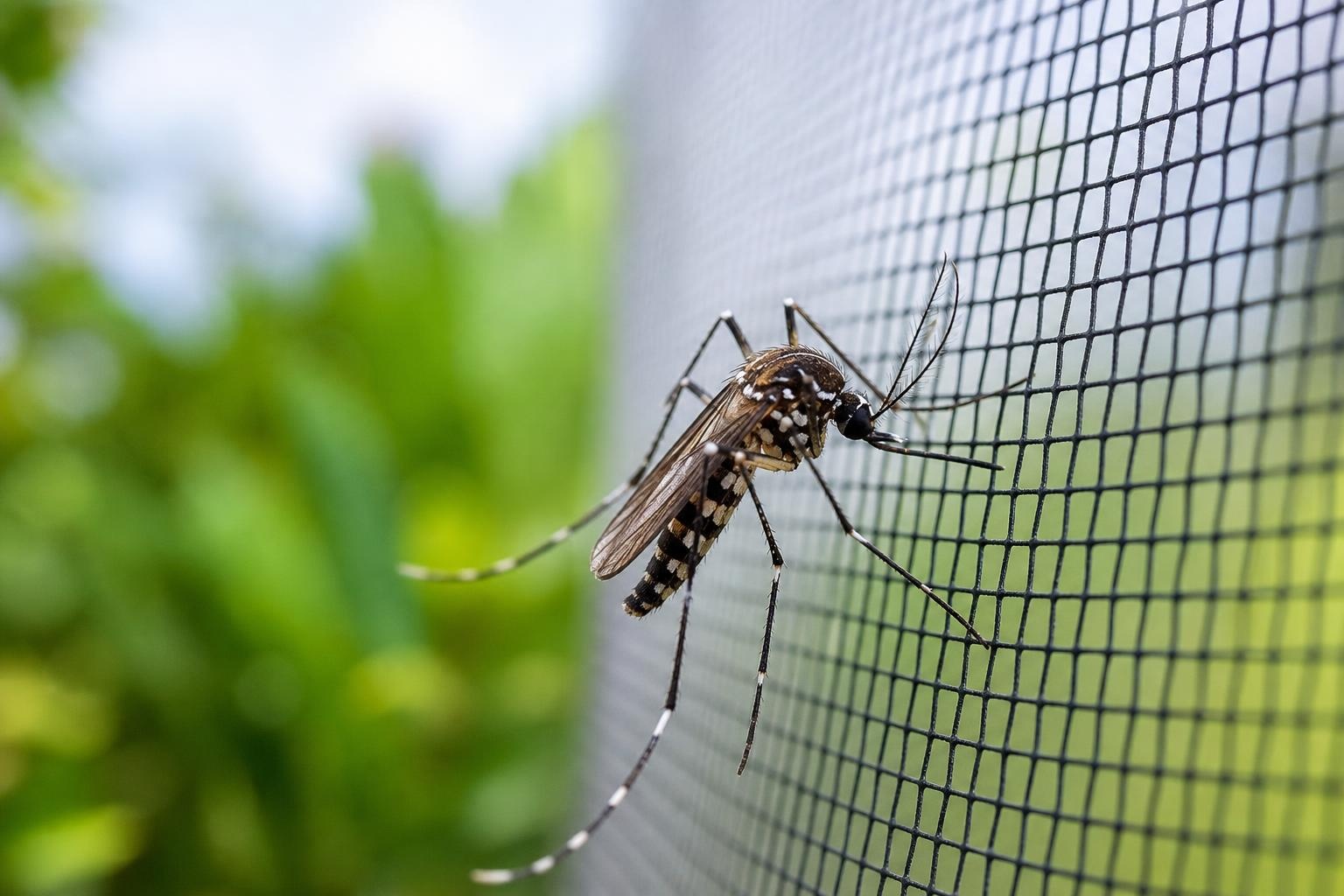
A high floor does not make an open-air evening automatically mosquito-free. In tropical Asia, the sensible approach is neither alarm nor guesswork: use the same proven bite-prevention measures you would use elsewhere outdoors, then make a few rooftop-specific choices about timing, clothing and seating.
Rooftop mosquitoes in Asia are best treated as a manageable planning variable. Public-health guidance focuses on reducing exposed skin, applying an appropriate repellent as directed and limiting places where water can collect. Floor number is not presented as a substitute for any of those steps.
Start with the right risk picture
Mosquito activity is not confined to one convenient hour. The US Centers for Disease Control and Prevention notes that mosquitoes can bite during the day and at night. For dengue specifically, the World Health Organization emphasizes protection from daytime bites, along with clothing that covers the body, repellents used according to their labels and measures that prevent stagnant water.
For a traveller, the practical lesson is simple: do not reserve all mosquito precautions for a late dinner, and do not assume that sunset is the only relevant period. A daytime pool visit, an early aperitif and a night out can each require the same basic preparation, depending on local conditions.
Local health authorities should guide any destination-specific decision. If dengue or another mosquito-borne disease is a concern during your trip, check current advice for the country or city rather than relying on a rooftop’s marketing photographs or general comments from previous guests.
Build a three-part pre-departure plan
1. Choose clothing that still works in the heat
Loose, lightweight clothing can reduce exposed skin without turning the evening into an endurance test. The CDC recommends loose-fitting long-sleeved shirts and trousers as one layer of bite prevention. For a rooftop, think in terms of an optional layer: a light overshirt or wrap that can be added when you settle outdoors and removed inside.
Keep the whole outfit suitable for the venue, but let comfort do some of the work. A heavy jacket that stays on the back of the chair offers no protection. Breathable fabric that you are willing to wear is the more useful choice.
2. Select repellent by its active ingredient and label
The Singapore National Environment Agency’s repellent guidance lists DEET, picaridin and IR3535 among the active ingredients used in registered topical repellents. The CDC also lists EPA-registered options and advises users to follow the product label and reapply only as directed.
A familiar scent or botanical claim is not the same thing as verified performance. Choose a product appropriate for the destination and the people using it, read the instructions, and avoid improvising the dose. If sunscreen is part of the plan, both the CDC and NEA advise applying sunscreen first and repellent second.
3. Carry the smallest useful kit
A practical rooftop kit can be compact:
- the chosen repellent in a travel-appropriate format;
- a lightweight layer for arms or legs;
- the booking confirmation and venue contact details;
- a simple indoor fallback if conditions become uncomfortable.
The point is not to pack for an expedition. It is to remove the small friction that leads people to leave repellent in the hotel room or stay at an exposed table after the evening stops being enjoyable.
Use a five-minute seat check
Before ordering, look at the table as a place where you may spend the next hour or two. A quick scan is more useful than trying to predict the entire night.
- Check your own exposure. Are bare ankles, feet or arms easy to cover if needed?
- Notice the operating zone. Is the table fully outdoors, beside an indoor section or close to a door that gives you an easy fallback?
- Look for obvious water collection. Plant saucers, containers, blocked drains or rainwater that remains after a shower are worth noticing and discreetly flagging to staff.
- Consider comfort as a whole. Heat, rain and wind may change the best table even when mosquitoes are not the main issue.
- Move early if necessary. Asking about another suitable table before food arrives is easier than relocating a full dinner.
Air movement may influence comfort and the performance of some spatial repellent products, but a breeze should not be treated as guaranteed bite protection. Use the live conditions to choose a seat, and use our guide to rooftop wind in Asia to think through exposed versus sheltered areas without turning either one into an automatic rule.
What the venue can control
Personal repellent addresses only one side of the problem. Venue maintenance matters because mosquitoes breed in stagnant water. Singapore’s official mosquito-control guidance identifies water-holding containers, choked drains and roof gutters among potential breeding habitats, and recommends regular housekeeping and professional control where breeding sites cannot be permanently removed.
Guests are not expected to inspect a property. Still, visible standing water or an overflowing plant saucer can be reported politely. A well-run response is practical: staff acknowledge the issue, move guests if appropriate and pass the observation to the facilities team.
Rain changes the equation because small collection points can appear quickly. Our article on rain-ready rooftop design explains how drainage, shelter and transitions affect the guest experience beyond the moment of a shower.
Do not outsource the plan to a gadget
Some familiar mosquito products have limits that matter in an open-air hospitality setting. NEA says protection from spatial repellents depends on the product and environmental conditions. It also notes limited evidence for plant-based candles and diffusers, and identifies ultrasonic devices as ineffective for preventing mosquito bites.
That makes a citronella-scented table feature a poor substitute for personal protection. Mosquito coils also introduce smoke and a fire risk, so guests should not bring or light their own in a venue. Any spatial control should be selected, placed and managed by the property under local rules.
The dependable hierarchy is less theatrical: use an approved topical repellent as directed, cover exposed skin where practical and let the venue manage its premises.
Adapt the plan to the visit
For one drink
Apply repellent before leaving, carry a light layer and choose a table with an easy indoor connection. A short visit does not require a complicated strategy, but it still benefits from preparation.
For a long dinner
Think about ankles and lower legs as well as arms. Ask whether the reservation guarantees an outdoor table or allows a move inside. The best table is the one that lets the meal continue comfortably, not necessarily the most exposed edge.
For families
Follow age-specific product labels carefully. The CDC and NEA publish additional guidance for applying repellents to children, including having an adult handle application and keeping products away from hands, eyes and mouths. When in doubt, prioritize physical barriers such as appropriate clothing and seek destination-specific health advice.
After recent rain
Expect the rooftop layout to be in transition. Covered zones may be busier, furniture may have moved and water may still be draining. Confirm the venue is fully operating, then choose the seat based on the conditions you find rather than the table shown in an older photograph.
Keep the evening in proportion
Mosquito prevention should support a rooftop visit, not dominate it. A label-following repellent, a wearable light layer, a quick seat check and an indoor fallback cover most of the decisions a guest can reasonably control.
What matters is using measures with credible guidance behind them. Do not trust elevation alone, do not assume one time of day is universally safe and do not confuse a decorative candle with a complete prevention plan. Prepare simply, respond to the actual conditions and let the skyline remain the memorable part of the evening.