
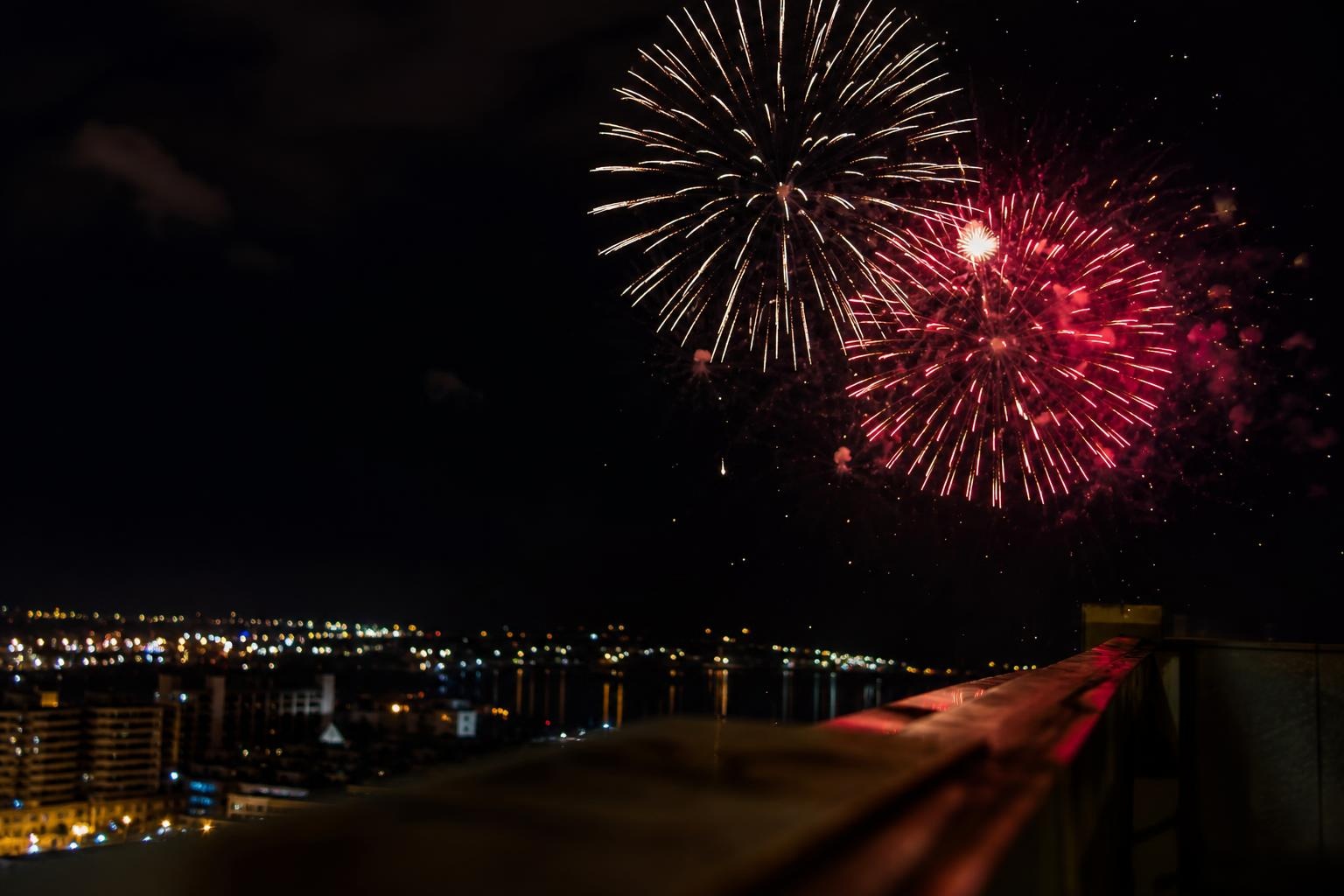
A rooftop fireworks night can look effortless from a distance: reserve a table, arrive before dark, and wait for the sky to light up. In practice, the best evenings depend less on the height of the building than on a chain of small decisions. The booking terms, the direction of the view, the indoor fallback, the sound level, the weather and the journey home all matter. For anyone planning rooftop fireworks in Asia, the goal is not simply to find a high terrace. It is to build a night that still works when the city becomes busy, loud or unpredictable.
Begin with what the booking actually guarantees
A special-event reservation is rarely the same as an ordinary rooftop booking. Before paying a deposit, ask what is included and what is merely possible. A rooftop table may not face the display. A dinner reservation may provide access to the terrace without assigning a viewing position. A venue may also move guests indoors if weather conditions change.
Confirm the arrival window, table duration, minimum spend, menu format, cancellation terms and refund policy. Ask whether standing areas are separate from dining tables, and whether guests can move between indoor and outdoor spaces. If the view is essential, request a clear description of the viewing zone rather than relying on a broad promise of a “panoramic” setting.
Keep the confirmation, venue contact details and payment terms accessible offline. On a crowded celebration night, this is more useful than searching through messages at the entrance.
Build the evening as four phases
A strong plan treats the display as one part of the night, not the whole event. Four simple phases make the experience easier to manage.
Before leaving
Check the venue’s latest message, the local weather forecast and the transport situation. Decide what would make you cancel or change plans. Comfortable shoes, a light layer and compact hearing protection take little space. If someone in the group is sensitive to smoke, loud sound, heights or dense crowds, agree on an indoor meeting point before departure.
On arrival
Arrive early enough to understand the layout while circulation is still easy. Locate the nearest indoor area, restroom and ordinary exit. Ask staff where guests will stand during the display and which routes must remain clear. This is also the moment to check the true direction of the view, because the most attractive table is not always the most useful viewing position.
During the display
Do not crowd roof edges, block service paths or move furniture without permission. Keep drinks away from phones and cameras, and avoid holding a device above other guests for long periods. These small choices fit the wider principles in our rooftop bar etiquette guide: share the view, respect the space and follow the venue team’s instructions.
After the last burst
The busiest moment often begins when the show ends. There is no prize for joining the first elevator queue. Settle the bill before the finale when the venue permits it, or wait in the designated area until the main rush eases. If streets are restricted, choose a realistic pickup point away from the most congested entrance and make sure everyone in the group knows it.
Choose sightlines, not a famous address
A celebrated skyline does not automatically produce a clear view. Nearby towers, parapets, awnings and temporary event structures can interrupt the sightline. Smoke may also drift across a display even when the sky looked clear earlier. Ask which direction guests will face and whether the fireworks are expected to appear above, beside or behind the main skyline.
Use photographs only as orientation, not as a guarantee. Images may have been taken from a different floor, a private area or a position unavailable during an event. Our guide to rooftop visibility in Asia explains why humidity, haze, rain and urban light can change a view from one hour to the next.
A partial but comfortable view can be better than a technically perfect angle in a crowded passage. Prioritise a stable place where the group can remain together without obstructing staff or other guests.
Protect comfort when sound and smoke arrive
Fireworks are not only visual. The US Centers for Disease Control and Prevention identifies fireworks among sources of noise that can damage hearing. Carry properly fitted earplugs, especially for children and anyone sensitive to sudden sound. Move away from loudspeakers and other amplified sound where possible; do not assume that an elevated position makes the event quiet.
Smoke and fine particles can also make an outdoor setting uncomfortable. The World Health Organization’s outdoor air-quality guidance notes the health effects associated with fine particulate matter. If smoke begins to collect around the terrace, follow staff directions, move to the indoor fallback and limit exposure rather than trying to preserve the perfect view. Guests with health concerns should rely on their own medical guidance when deciding whether an outdoor event is suitable.
Treat weather and crowd movement as one plan
Rain is inconvenient; lightning and strong wind can change whether an outdoor area is safe to use. A practical venue plan should explain who monitors conditions, where guests can shelter and how an evacuation or move indoors will be communicated. The US National Weather Service Event Ready Guide frames event planning around the hazards, the available shelter or evacuation route, the warning method and the time needed to act.
For guests, the useful response is simple: identify the indoor option, keep one route clear in your mind and follow staff instructions promptly. Do not wait under an awning or beside a roof edge if the terrace is being cleared. Our guide to rooftop thunderstorms in Asia offers a fuller planning framework for unstable weather.
Crowd movement belongs in the same plan because a weather change can send many people toward a small number of doors at once. Keep bags close, avoid gathering in circulation zones and choose one meeting point in case the group becomes separated. The safest route may be slower than the shortest one.
Make the exit deliberately ordinary
The most memorable part of a rooftop fireworks night should be the sky, not an argument about a deposit, a blocked view or a missing ride. Confirm what the reservation guarantees, arrive early enough to read the room, protect hearing and breathing comfort, and know how the group will leave.
A carefully planned evening can still feel spontaneous. The difference is that the practical decisions have already been made. When the first fireworks appear, everyone can look up instead of solving logistics.