
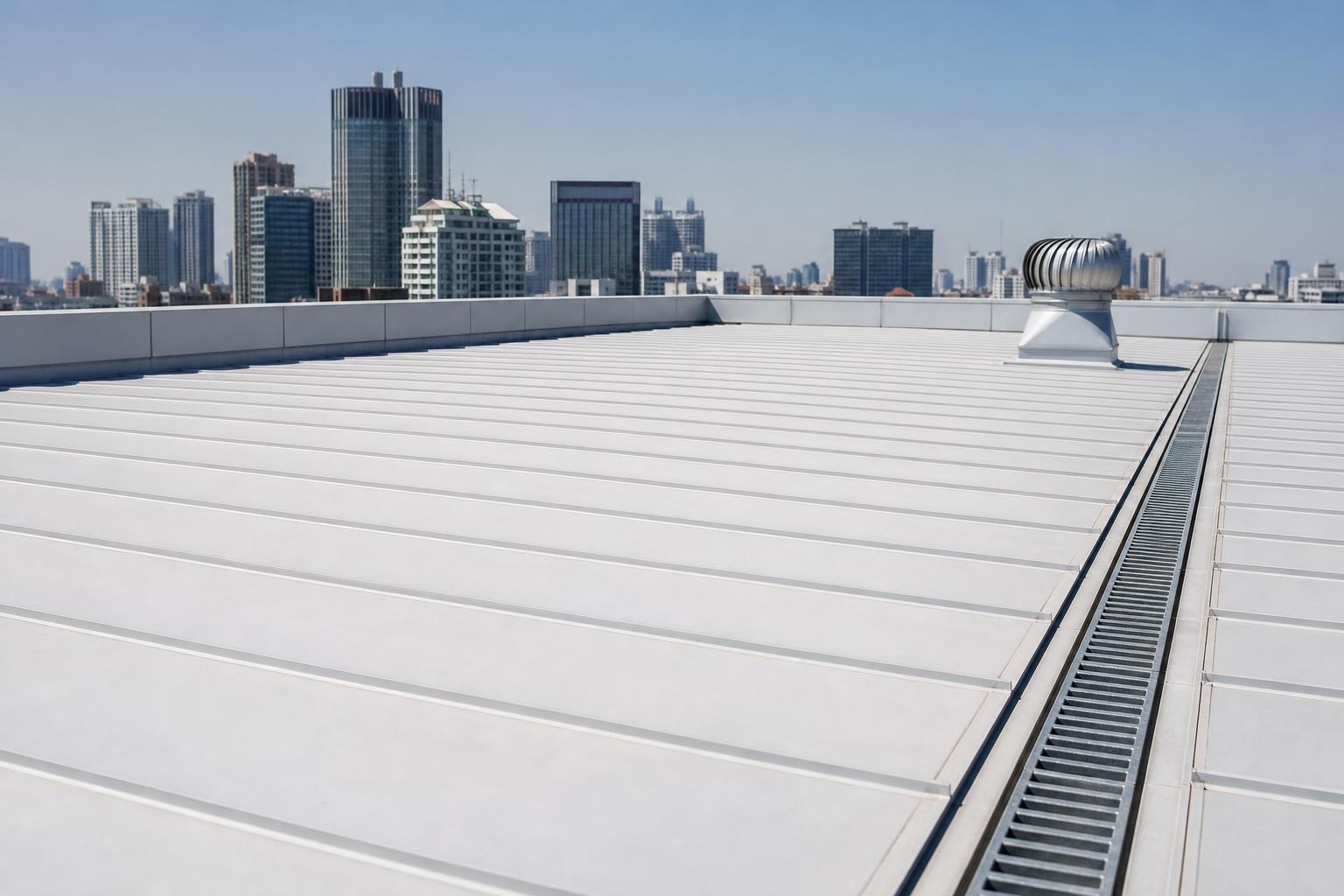
A rooftop can look bright, polished and heat-conscious without actually feeling comfortable. A pale surface may reflect more sunlight than a dark one, but colour is only the first clue. The material also needs to release absorbed heat, avoid throwing glare into occupied areas, cope with rain and dirt, and work with shade rather than against it.
That makes cool roofs in Asia more interesting than the familiar instruction to “paint the roof white.” Across the region’s hot, humid and densely built cities, reflective surfaces sit inside a larger passive-cooling strategy. The useful question is not whether a roof looks cool. It is whether the entire surface system manages sunlight, heat and everyday use well.
What makes a roof “cool”?
Two properties do most of the technical work. Solar reflectance describes how much incoming sunlight a surface reflects. Thermal emittance describes how effectively that surface releases absorbed heat as thermal radiation. The US Department of Energy’s guide to cool roofs treats both as essential: a roof that reflects strongly but releases heat poorly can still become warmer than its colour suggests.
Designers sometimes combine these properties in a Solar Reflectance Index, or SRI, to compare how hot materials are likely to become in the sun. That number is useful for specifications, but it is not a complete promise of comfort. Insulation, wind, shade, humidity, surrounding glass, the roof’s construction and the position of occupied areas all affect what people eventually feel.
The regional context matters too. The UNEP-backed passive-cooling roadmap for ASEAN places reflective surfaces alongside ventilation, shading, thermal mass and climate-responsive design. In other words, a cool roof is one layer of a passive-first approach, not a substitute for every other layer.
A white surface is a starting point, not a verdict
Light-coloured coatings and membranes can absorb less solar energy than conventional dark surfaces. Some “cool-coloured” products also use pigments that reflect more near-infrared energy without appearing brilliant white. The important distinction is performance rather than appearance: two pale materials can have different reflectance and emittance values, while a darker engineered finish may outperform a conventional dark one.
There is also a difference between the weatherproof roof beneath the building and the surfaces people walk on. An occupied rooftop may combine membrane, pavers, raised decking, planters, service paths and shaded structures. Each element creates a different thermal experience. A specification that performs well over a large unoccupied area may need a different finish beside tables, glazing or circulation routes.
This is where the guest experience becomes a useful design test. On a hot afternoon, a poorly considered surface can radiate heat upward, make the walk from the lift uncomfortable or create a sharp reflected brightness around seating. A better composition balances cooler materials with well-placed shade, air movement and a sensible route through the space.
Four surface strategies, four different jobs
| Strategy | What it can do | What still needs checking |
|---|---|---|
| Reflective coating or membrane | Reduces the share of sunlight absorbed by the roof surface | Aged performance, glare, waterproofing compatibility and cleaning |
| Light-coloured pavers | Creates a durable walking surface while limiting heat absorption | Slip resistance, drainage, joints, glare and heat stored in the assembly |
| Vegetated roof areas | Adds shade and evapotranspiration while softening hard roof geometry | Structure, irrigation, plant suitability, wind exposure and maintenance |
| Canopies or solar shade | Stops direct sun before it reaches an occupied surface | Airflow, rain protection, reflected light and the path of afternoon sun |
These approaches are not rivals. A large roof may use all four in different zones. The Singapore Building and Construction Authority’s resilience guidance groups reflective materials with greenery, shade, permeable surfaces and attention to prevailing wind. That combination is a helpful reminder that thermal comfort depends on how systems meet, not on one photogenic material.
The glare problem belongs in the same conversation
High reflectance can lower solar heat gain, yet a badly oriented or highly specular surface can send uncomfortable light toward guests, neighbouring buildings or glazed facades. Matte finishes, material angle, parapets, planting and shade geometry can change where reflected light goes. A surface that performs well in a laboratory still needs to be composed carefully on a real roof.
The practical distinction is between reflecting more solar energy and creating a mirror-like reflection. They are not the same thing. A diffuse light surface can scatter reflection broadly, while polished metal or glass may produce a much more concentrated glare path. The US Department of Energy’s building-envelope guidance explicitly recommends considering unwanted reflections and glare when selecting lighter exterior surfaces.
For guests, glare often appears before the technical performance becomes obvious. If everyone at one side of a table is squinting, if a pale floor dominates the field of view, or if nearby glazing doubles the brightness, the surface and shade strategy may not be working together.
Weathering can change the answer
A cool roof is not frozen at its installation-day performance. Dust, pollution, biological growth, foot traffic and ponded water can reduce reflectance. Research summarized by Lawrence Berkeley National Laboratory documents how weathering and soiling lower the solar reflectance of roofing membranes, and why maintenance affects long-term results.
This is particularly relevant to rooftops that are occupied or serviced frequently. Designated walking routes can limit dirt across the main membrane. Good falls and clear drainage help prevent standing water. Cleaning methods must suit the manufacturer’s system, because aggressive treatment can damage a coating or waterproof layer.
Maintenance also changes what visitors see. A surface chosen for brightness can become patchy or stained; a drainage channel can collect debris; a once-matte coating can weather unevenly. The design decision therefore includes access for inspection, repair and cleaning, not only the original material sample.
A 60-second comfort reading for rooftop guests
You do not need an instrument to notice whether a rooftop surface strategy is coherent. Before settling into the most exposed table, pause and read the space:
- Look at the walking surface. Very dark paving in direct sun is a warning that the approach may hold and reradiate heat.
- Check the light path. Bright reflected light from floors, walls or glazing can matter as much as direct sun.
- Find the layered zone. A table with overhead shade, open sides and a lighter surrounding surface often gives the design more ways to manage heat.
- Notice the transition. Compare the exposed route from the lift with the shaded seating area. A good rooftop should not rely on one comfortable pocket.
- Reassess after rain. Drainage, slip resistance and covered circulation become more important than reflectance when a tropical shower arrives.
Table position still matters. Our guide to choosing rooftop seating explains how edge tables, sheltered dining areas and interior-adjacent seats trade views against weather exposure. Cool-roof design adds another layer: the surface around the table can change radiant heat and reflected brightness even when the air temperature is identical.
The best cool roof is a coordinated one
The strongest designs do not turn a technical metric into a visual gimmick. They use proven surface properties, then coordinate them with shade, planting, airflow, drainage, waterproofing and maintenance. They also test how the roof behaves at the hours people actually use it, from hard afternoon sun to the heat stored after sunset.
For operators and designers, that means asking for aged reflectance data rather than judging a fresh sample, checking glare from occupied viewpoints and protecting the waterproofing system beneath every visible finish. For guests, it means reading the whole rooftop rather than assuming the palest table area will be the coolest.
A cool roof works when the science stays quietly in the background and the experience feels easier: less radiated heat, less squinting, a calmer route across the roof and a surface that still performs after seasons of sun and rain.