
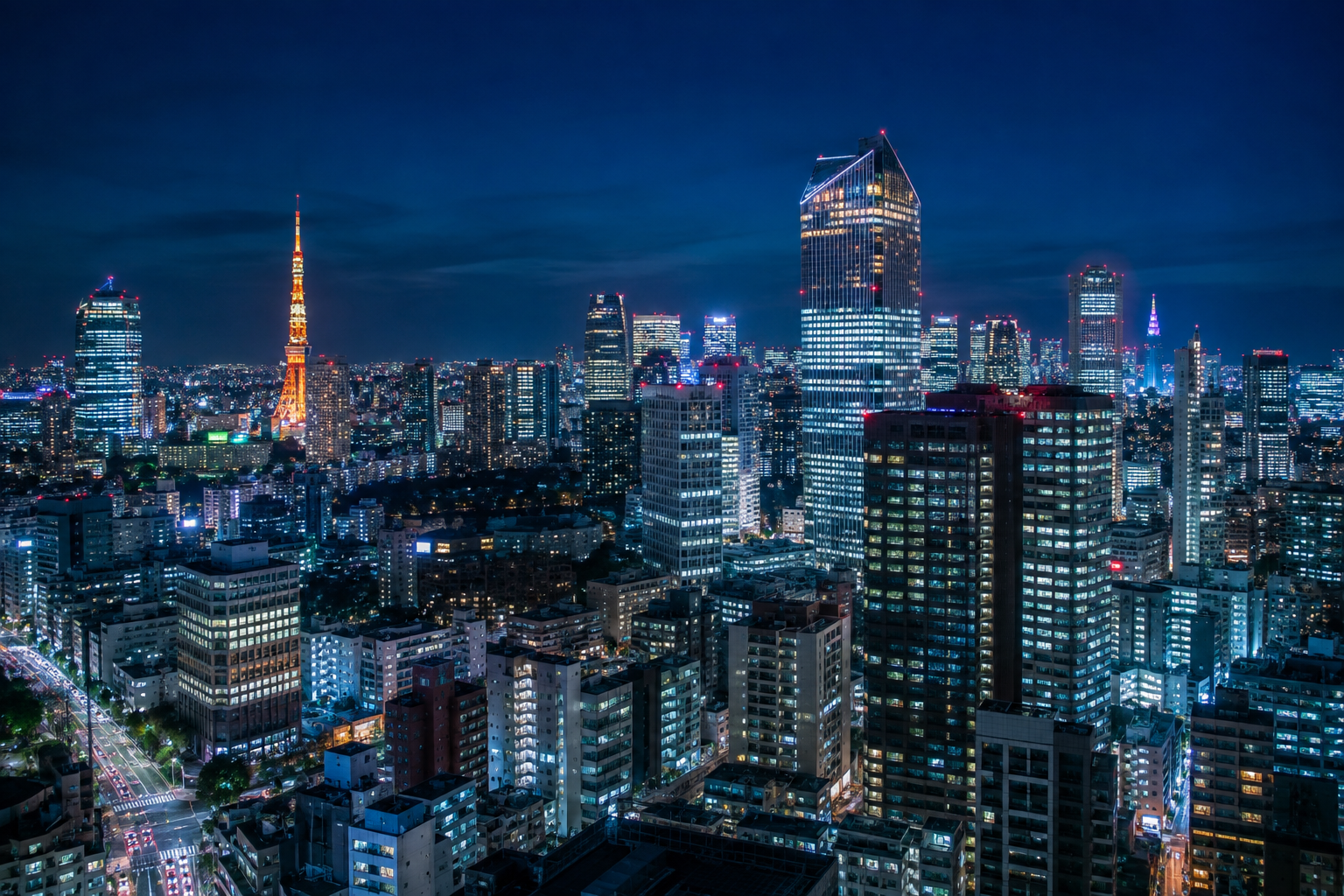
Tokyo after dark is a sequence of districts, each with its own momentum: the bright convergence of Shibuya, the composed verticality of Toranomon, the polished high-rise setting around Yaesu. The neighbourhood you choose determines much of the evening’s character.
Begin with the area in which you want to arrive, linger and leave, then use the rooftop view and venue format as the final filters. A rooftop can be the centrepiece of the night, or a deliberate pause between the city below and whatever comes next.
Choose the neighbourhood before choosing the skyline
For a rooftop evening that feels connected to the city’s faster, more visible side, start with Shibuya. The district suits an outing where the rooftop is part of an energetic urban scene rather than a retreat from it. Looking out from here means looking into a dense field of buildings and movement: a cityscape experience with an unmistakably central-Tokyo feel.
THE ROOF SHIBUYA SKY is a useful expression of that choice. Set in the open-air SKY STAGE rooftop observation area, it pairs drinks and snacks with views across Tokyo’s high-rise skyline, including Tokyo Tower and Tokyo Skytree. It is best considered when being outdoors and taking in the broad city panorama matter as much as the drink itself. Its official page lists seasonal operation in 2026 from April 29 to December 25, so it is wise to check the current details before building an evening around it.
Toranomon changes the emphasis. Here, a rooftop can feel like a more self-contained destination: somewhere to settle into the scale of the city rather than chase its most immediate buzz. Rooftop Bar at Andaz Tokyo Toranomon Hills is on the 52nd floor and has a semi-open-air terrace, with night views toward Tokyo Bay and Odaiba. For travellers drawn to altitude and a more expansive outward-looking perspective, this is the neighbourhood logic to follow.
Yaesu offers another proposition: choose it when the appeal is a refined, elevated stop in a major city-centre setting. At The Bvlgari Bar, on the 45th floor of Bvlgari Hotel Tokyo, the Tokyo skyline is visible from both the indoor space and outdoor terrace. This makes the area worth considering when the option of moving between inside and outside is part of the desired format.
Match the atmosphere to the role the rooftop plays
Ask one direct question: is the rooftop the whole evening, or an interlude within it? The answer should shape the district.
- Make it the main event: Shibuya works when open sky and a wide, recognisable city vista are the priority. Leave enough room in the plan to be present for the view rather than treating it as a quick stop.
- Create a composed high-rise moment: Toranomon is a strong fit when the draw is the sensation of being above the city, with the evening focused around the venue itself.
- Keep the format flexible: Yaesu is compelling when an indoor-and-terrace option better suits the kind of night you want to have.
Each area works for a different kind of evening. Shibuya brings immersion in the visible city, Toranomon creates more distance from it, and Yaesu offers flexibility between indoor and outdoor settings.
Let the view type guide the area
“Skyline view” is a broad phrase. In practice, there are meaningful differences between looking across landmarks, looking toward the bay, and looking over the concentrated geometry of central Tokyo.
Shibuya is the choice for a landmark-oriented sweep: THE ROOF SHIBUYA SKY specifically identifies Tokyo Tower and Tokyo Skytree among the sights across its high-rise outlook. It suits visitors who want the rooftop view to read immediately as Tokyo.
Toranomon is more appealing when the eye is drawn farther outward. The Andaz rooftop’s stated outlook toward Tokyo Bay and Odaiba gives the scene a different sense of breadth. It is less about identifying a single urban icon and more about absorbing the city’s larger nighttime expanse.
In Yaesu, The Bvlgari Bar offers a skyline setting from two different environments: interior and terrace. That distinction can matter more than a checklist of landmarks. If the evening calls for city views without committing entirely to the open air, this format deserves priority.
Keep the plan intentionally simple
A neighbourhood-led decision prevents a common Tokyo mistake: trying to cross the city simply to collect rooftop names. Pick one area, give the rooftop a clear role, and make the view part of the occasion rather than a logistical challenge.
Before setting out, confirm the venue’s current operation directly with its official information. Rooftop experiences can be seasonal, and the details that matter most—such as whether an outdoor element is available—can shape the entire plan.
For more places to build an elevated itinerary, browse Rooftop Asia’s rooftop bars by city in Asia and its wider collection of rooftops by country in Asia. Tokyo rewards a selective approach: choose the neighbourhood that fits your evening, then let the rooftop show you that version of the city.