
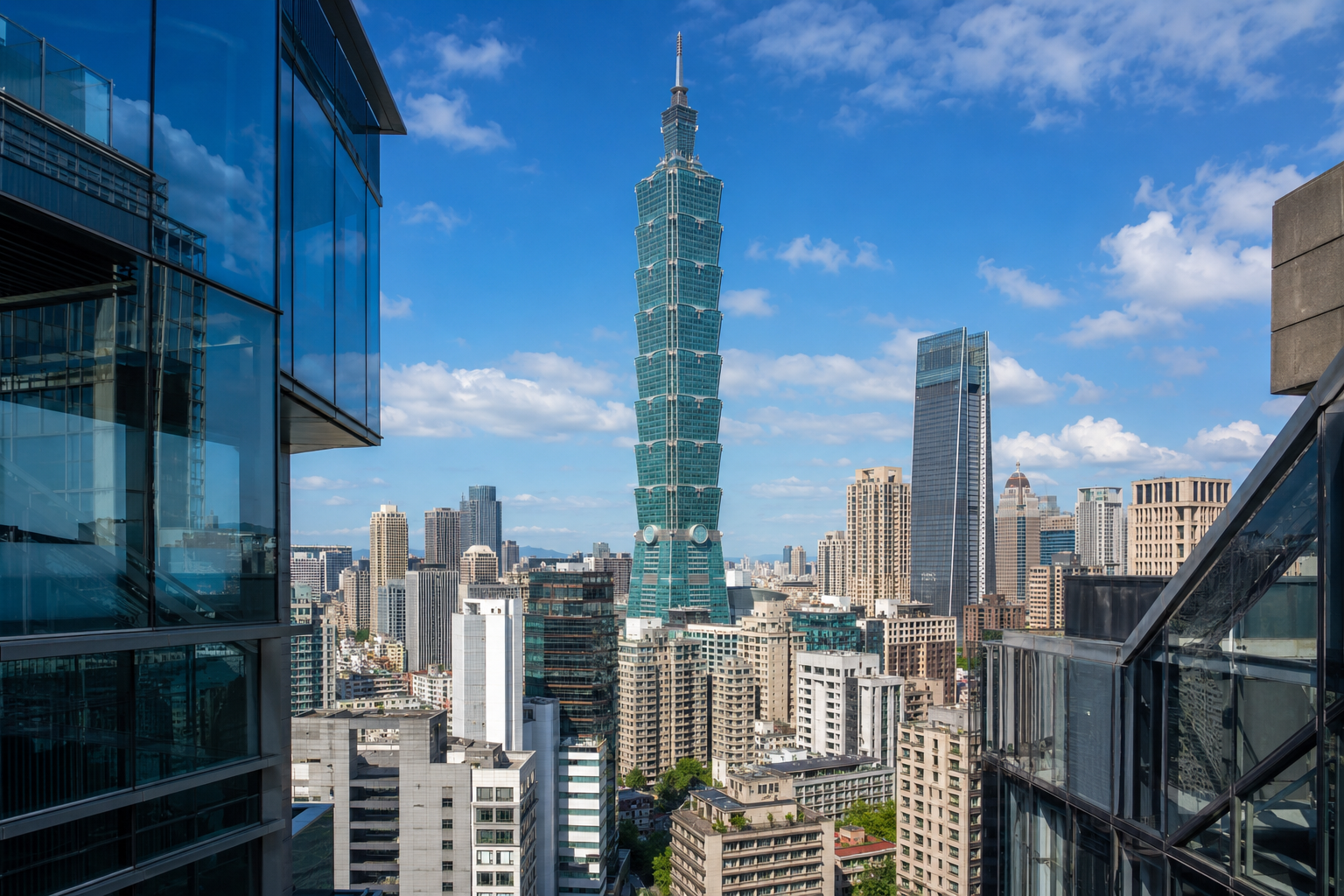
At SEA TO SKY’s Sky Bar, the official venue description identifies an outdoor rooftop setting on the 47th floor in Xinyi District, with a view towards Taipei 101. That combination—height, open air and a deliberately framed landmark—is a useful starting point for reading rooftop design in Taipei.
In a closely built urban setting, a rooftop is not simply an elevated room. Its character is shaped by what the building permits visitors to see, how exposed the terrace feels, and whether the space directs attention outward or gathers it inward. The most useful clues are the design decisions behind the experience.
Start with the relationship between height and surroundings
Elevation changes more than the size of a view. It changes the visual distance between the guest and the city. A higher rooftop can make a landmark or skyline element feel like part of a wider composition; a lower terrace may create a more immediate relationship with neighbouring buildings and street activity.
When choosing a rooftop, ask what kind of urban reading you want. A broad, distant outlook suits visitors who want to orient themselves within the city. A nearer, more enclosed outlook can be preferable when the appeal lies in atmosphere, conversation and the texture of the surrounding district rather than a single panoramic image.
Read openness as a design choice, not a bonus feature
“Rooftop” can describe very different spatial conditions. An outdoor sky bar, an enclosed lounge with high windows, and a dining room with an attached terrace all offer elevation, but they do not produce the same experience.
- Open-air space makes the sky and weather part of the visit. The edge of the building, the horizon and the movement of the city become more present.
- Interior space with a view puts greater emphasis on framing: glazing, seating orientation and the contrast between the room and the city beyond it.
- A terrace linked to an indoor venue creates a transition between the two, allowing the rooftop moment to be part of a longer meal or evening rather than its entire focus.
The right choice depends on whether you are seeking exposure to the city or a more protected place from which to observe it. Both are valid rooftop experiences, built around different relationships with the city.
Think of landmark views as composed sightlines
A celebrated view is rarely only about being high enough. It is also about where people sit, stand and look. Sightlines can be direct, peripheral or partially framed by the building itself. That is why a venue’s relationship to a landmark matters more than a general promise of city views.
SEA TO SKY is a clear example of the direct-sightline approach: its Sky Bar specifically identifies a Taipei 101 view. For a visitor, that makes the venue’s visual proposition easy to understand before choosing it. The landmark is not an incidental possibility; it is part of the documented rooftop experience.
For design-minded visitors, this suggests a simple question: do you want the landmark to be the focal point, or would you rather let the wider city form the backdrop? A direct view can give an evening a strong visual anchor. A less prescriptive outlook leaves more room for the neighbourhood and changing light to set the mood.
Choose a rooftop by the experience you want to inhabit
Use a few practical criteria before booking or heading out:
- For a landmark-led evening: prioritise venues that explicitly document the sightline you care about, rather than assuming every elevated address will offer it.
- For an outdoor experience: look for wording such as “outdoor” or “sky bar,” which signals that the open-air condition is central to the venue.
- For a city-reading moment: consider how high the venue is and whether the view is likely to feel expansive or close-in.
- For a social occasion: consider whether you want the view to command attention or simply support the conversation.
These distinctions can also help when comparing rooftop destinations across the region. Browse Rooftop Asia’s city guides for urban starting points, or explore rooftops by country in Asia to place Taipei within a wider regional journey.
A practical way to read Taipei rooftop design
Begin with three things: the level of elevation, the degree of openness, and the intended sightline. Together, they explain far more about a rooftop than the word “view” alone. In Taipei, a rooftop can be a platform for looking outward, a sheltered room that frames the city, or an open-air setting that makes a landmark part of the evening.
Choose the version that matches your purpose. If Taipei 101 is central to the occasion, select a venue that explicitly presents that relationship. If the appeal is simply being above the neighbourhood, focus instead on the balance of exposure, comfort and the kind of urban perspective you want to take away.