
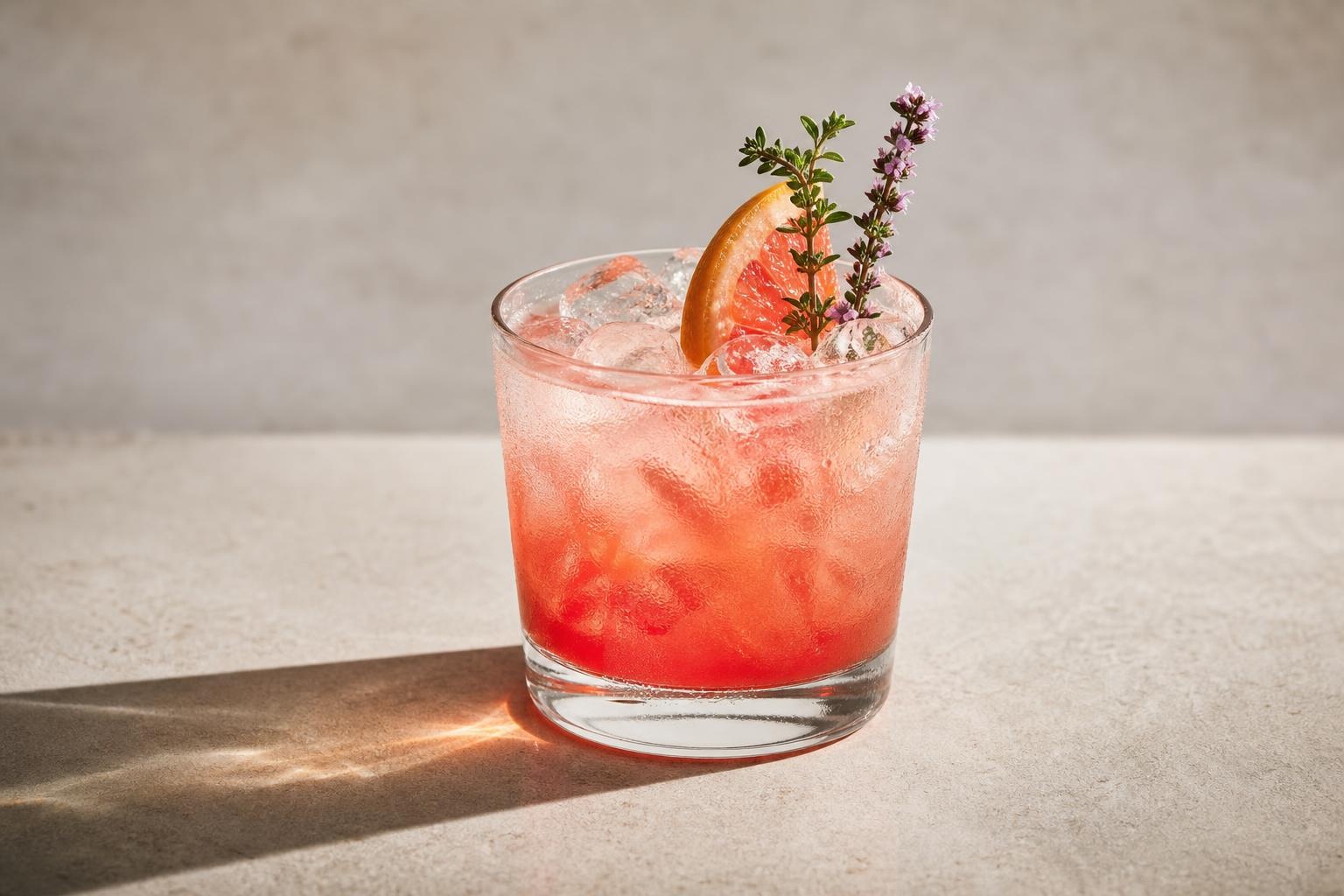
A rooftop drink does not need alcohol to feel deliberate. The view, the change of light and the sense of occasion are already doing part of the work. What matters in the glass is structure: enough acidity to stay lively, enough aroma to remain interesting and a finish that does not collapse into sweetness after two sips.
That is the useful way to approach rooftop mocktails in Asia. Do not begin by asking for an imitation of whatever cocktail your friends are drinking. Begin with the flavour and pace you want, then find out what the menu actually means by words such as “zero”, “alcohol-free” or “non-alcoholic”.
First decide what job the drink should do
A mocktail can open the evening, accompany food or last through a long conversation. Those are different jobs, and they call for different drinks.
If you have arrived before sunset and want something brisk, look for citrus, tea, herbs, soda or tonic-like bitterness. These elements can make a tall drink feel refreshing without relying on a large dose of syrup. If the mocktail will sit beside dinner, ask for a drier profile with clear acidity and a restrained garnish. If the drink is the main event, more layered ingredients such as spice, smoke, roasted tea or a non-alcoholic botanical base can give it a slower, more contemplative shape.
Acidity is especially useful because it gives a mixed drink definition and counters sweetness. Diageo Bar Academy’s professional guide to acidity in cocktails describes acid as a source of structure, depth and refreshment rather than simply sourness. From the guest’s side of the bar, the practical lesson is simple: when a mocktail sounds fruit-heavy, ask what provides the acidity or bitter edge.
Read the menu as a flavour map
Mocktail names are often atmospheric, while ingredient lists do the real explanatory work. Scan for the elements that create tension and texture, not only for the most familiar fruit.
Bright and long
Citrus, soda, sparkling tea, cucumber and fresh herbs usually point towards a lighter drink designed to remain refreshing. This is a useful first order in warm conditions or when you plan to stay for more than one round. Ask whether the drink is sharply dry or softened with cordial, syrup or sweetened juice; “refreshing” does not automatically mean low in sweetness.
Bitter and aperitif-like
Grapefruit, tonic, gentian-style flavours, tea tannin and bitter orange can produce a more grown-up opening drink. Bitterness also gives a mocktail a clearer finish, which helps when you want something to sip rather than drink quickly. If you are sensitive to bitterness, ask for a gentler build instead of requesting extra sugar immediately.
Spiced, roasted or savoury
Ginger, pepper, cardamom, roasted tea, coffee, tamarind and lightly saline ingredients can move a drink away from the juice-and-soda template. These profiles work particularly well when the mocktail should hold attention on its own. They may also pair more naturally with savoury snacks than a tropical-fruit drink with a sweet finish.
A useful non-alcoholic cocktail does not need every flavour at once. The examples collected in Diageo Bar Academy’s non-alcoholic cocktail guide repeatedly use contrasts such as sweet with tart, spice with fruit, or acidity with fizz. That contrast is a better signal of intention than an elaborate garnish.
“Zero” is a question, not a universal promise
For many guests, avoiding alcohol is a preference. For others, it is connected to driving, pregnancy, medication, recovery, health or religion. Those situations deserve precise information rather than assumptions.
The World Health Organization’s public-health brief on zero- and low-alcohol beverages notes that definitions and regulation are not harmonised and calls for clear alcohol-by-volume labelling. Government guidance also shows how much descriptors can vary between markets. In England, for example, official low-alcohol descriptor guidance distinguishes among “alcohol free”, “de-alcoholised” and “low alcohol” using different ABV thresholds. Those thresholds are not a template for all of Asia; they are evidence that the words themselves should not be treated as globally interchangeable.
If complete avoidance matters, ask the venue directly:
- Is the finished drink 0.0% ABV, or is it simply lower in alcohol than a standard cocktail?
- Does it use bitters, fermented ingredients or a dealcoholised wine or spirit alternative?
- Is the drink prepared with equipment or garnishes shared with alcoholic cocktails?
- Can the team make a drink from ingredients whose contents they can confirm?
You do not need to explain why you are asking. A concise requirement is enough: “I need a drink with no alcohol at all; can you confirm which options fit?” If the answer is uncertain, choose a straightforward combination such as soda, citrus and a clearly identified syrup, or order a packaged 0.0% product whose label you can read.
Use four details to improve the order
A short conversation with the server or bartender can turn a vague request into a good drink. Give four pieces of information:
- Sweetness: dry, lightly sweet or dessert-like.
- Profile: citrus, herbal, bitter, spicy, savoury or fruit-forward.
- Texture: sparkling and long, still and concentrated, or creamy.
- Purpose: before dinner, with food, for a toast or for slow sipping.
For example: “Could I have something sparkling, citrus-led and not too sweet to drink with dinner?” is much easier to answer than “What mocktail is good?” The wording gives the team room to use the ingredients they have while protecting the qualities that matter to you.
If the menu only offers one very sweet house mocktail, ask whether it can be lengthened with soda, made with less syrup or balanced with more citrus. Not every recipe can be changed cleanly, so accept a direct answer. Plain sparkling water with fresh citrus can be a better choice than a complicated drink forced into the wrong shape.
Match the drink to the rooftop pace
Open-air settings change how a drink behaves. Ice melts, bubbles soften and aromatic garnishes lose impact as a glass sits in warm air. A tall serve can feel generous, but it may also become diluted if you are photographing the skyline or talking for a long time before drinking it.
Choose a shorter drink when flavour intensity matters more than duration. Choose a highball or spritz-style mocktail when refreshment and slower sipping matter, but order it when you are ready to drink rather than before an extended photo session. If you expect to move between an indoor bar and an outdoor edge, a stable, uncluttered glass is easier to carry than a top-heavy garnish.
The drink should also fit the social shape of the visit. Someone following Rooftop Asia’s guide to going to a rooftop bar alone may prefer one well-chosen mocktail at a bar seat, while a group can order contrasting styles and compare them. Either way, there is no need to defend an alcohol-free choice. Order clearly, enjoy the view and let the drink be part of the evening rather than its explanation.
A better final question than “What has no alcohol?”
Ask instead: “Which alcohol-free drink here is driest, and which has the most bitterness or spice?” That question reveals whether the menu offers genuine range. It also shifts the conversation from absence to flavour.
Good rooftop mocktails are not consolation prizes. They can be bright, bitter, aromatic, savoury or celebratory, and they can support dinner as naturally as they support a sunset toast. Confirm the alcohol details when precision matters, choose the structure that suits your pace and judge the drink by what it brings to the glass.